


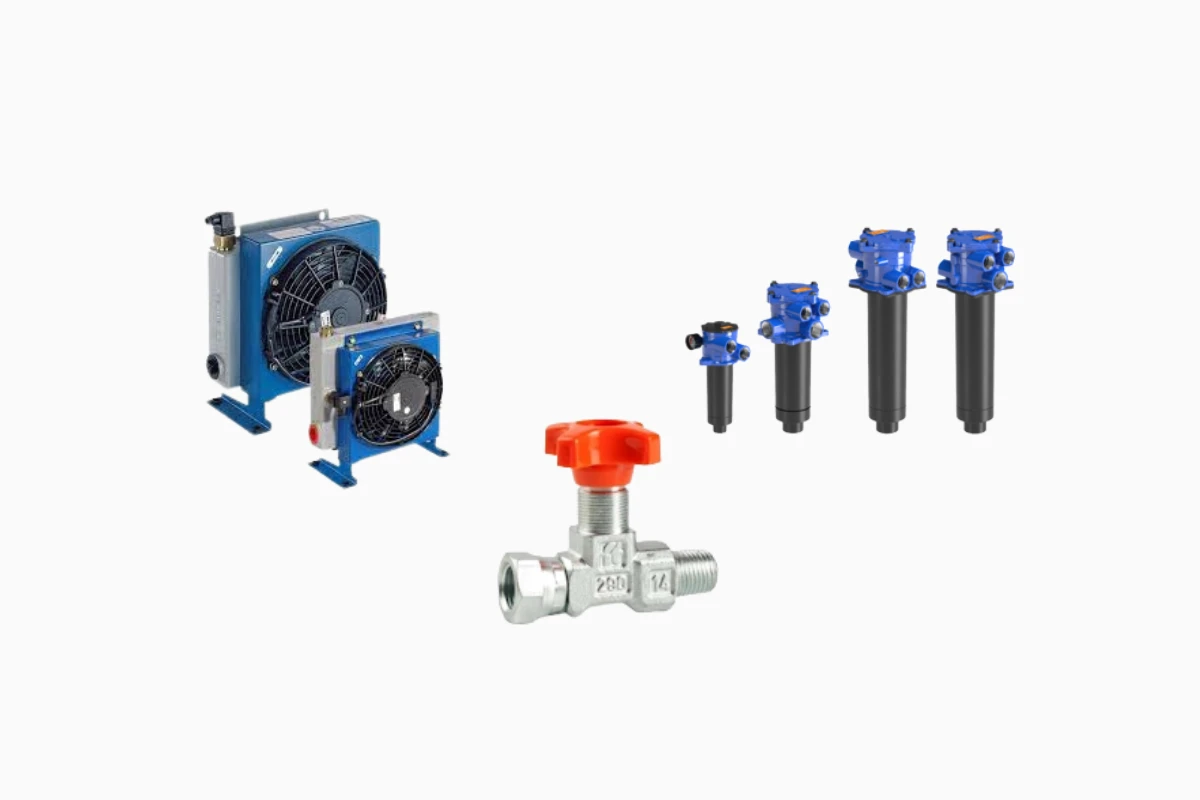
A hydraulic system does not fail suddenly. It fails progressively, through measurable signals that are often ignored until the machine comes to a stop. A structured hydraulic maintenance plan transforms maintenance from a reactive cost into a strategic lever for reliability, production continuity, and TCO control. Planning for the new year means deciding whether the system will operate under control or under stress.
From reactive maintenance to preventive strategy
Corrective maintenance intervenes when the damage has already occurred. It is the most expensive form of technical management because it combines the failure itself with downtime, production losses, and operational urgency. Preventive and predictive maintenance, on the other hand, anticipates problems by acting on the factors that generate wear: contamination, temperature, pressure, and component degradation.
An effective plan starts from a simple principle: hydraulics operate in balance. When one parameter moves out of range, the entire system accelerates its aging process. The goal of maintenance is not to “repair,” but to maintain this balance over time.
Initial system analysis and definition of priorities
Every annual plan must begin with a technical snapshot of the current condition. This means mapping the system, identifying critical components, and understanding the real operating cycle, not the theoretical one. Pumps, proportional valves, servo controls, cylinders, and heat exchangers do not all have the same impact on operational risk.
A common mistake is to treat all components the same way. An engineering approach instead assigns priorities based on:
- the component’s function in the process
- the cost of downtime associated with its failure
- sensitivity to contamination and temperature
- maintenance and anomaly history
This analysis makes it possible to correctly allocate time, resources, and budget.
The fluid as the primary indicator of system health
Hydraulic oil is the nervous system of the installation. It transmits power, dissipates heat, and lubricates. When it degrades, the entire system loses precision and efficiency. An annual plan must include scheduled fluid checks, not just replacements at fixed intervals.
Monitoring oil condition makes it possible to detect:
- increase in solid particulate contamination
- water contamination
- viscosity variations
- oxidation and additive depletion
Thinking of oil as a “consumable” is reductive. It is a diagnostic tool that tells what is happening inside the circuit before a failure becomes visible.
Periodic checks and diagnostic tools
Modern maintenance is based on measurement. Pressure, temperature, flow rate, and pressure drop are not abstract numbers, but direct indicators of efficiency and wear. Integrating these checks into the annual plan makes it possible to move from calendar-based interventions to actions based on the actual condition of the system.
Pressure and flow: reading what the machine communicates
A slow and constant variation in operating pressure often signals internal leaks, valves that do not close properly, or pumps losing volumetric efficiency. Unstable flow, on the other hand, indicates cavitation, air in the circuit, or unexpected restrictions.
Using reliable monitoring instruments, such as those available in the pressure gauges section, makes it possible to perform quick and repeatable checks, creating a data history that is fundamental for predictive maintenance.
Temperature and thermal management
Heat accelerates oil aging and reduces seal service life. An annual maintenance plan must define clear operating thresholds and intervention procedures when they are exceeded. This includes:
- periodic inspection of heat exchangers
- cleaning of heat exchange surfaces
- checking cooling flows
- assessment of the system’s actual thermal load
A system that constantly operates above temperature limits is not only inefficient: it is destined to fail.
Filtration: preventing rather than repairing
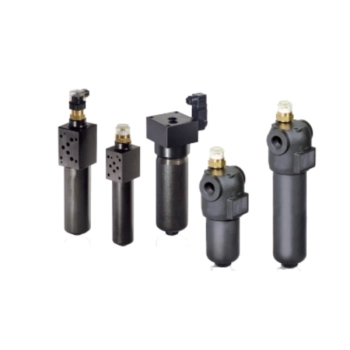
Contamination is inevitable; damage is not. The plan must include systematic filter monitoring, not just replacement. Differential pressure indicates how hard the filter is working and how close it is to bypass.
Integrating checks on suction, return, pressure, and offline filtration makes it possible to maintain the cleanliness class required by the most sensitive components, dramatically extending their operating life.
Operational planning and integration with production
An effective maintenance plan does not exist in isolation. It must interact with production. Scheduling interventions during periods of lower operational impact reduces indirect costs and improves acceptance of maintenance as a strategic function.
Schedule, checklists, and responsibilities
The annual plan must be translated into concrete tools:
- maintenance schedule
- standardized checklists
- clearly defined roles and responsibilities
- escalation procedures in case of anomalies
Each check must have a clear objective and acceptance criteria. Without standards, maintenance becomes subjective and ineffective.
Data, history, and continuous improvement
Every intervention generates information. Collecting and analyzing it makes it possible to refine the plan year after year. Recurring increases in contamination, seasonal thermal drift, or a component requiring frequent intervention are signals that the system’s design or usage needs optimization.
The true value of the plan is not only preventing failures, but creating internal technical knowledge and reducing operational uncertainty.