

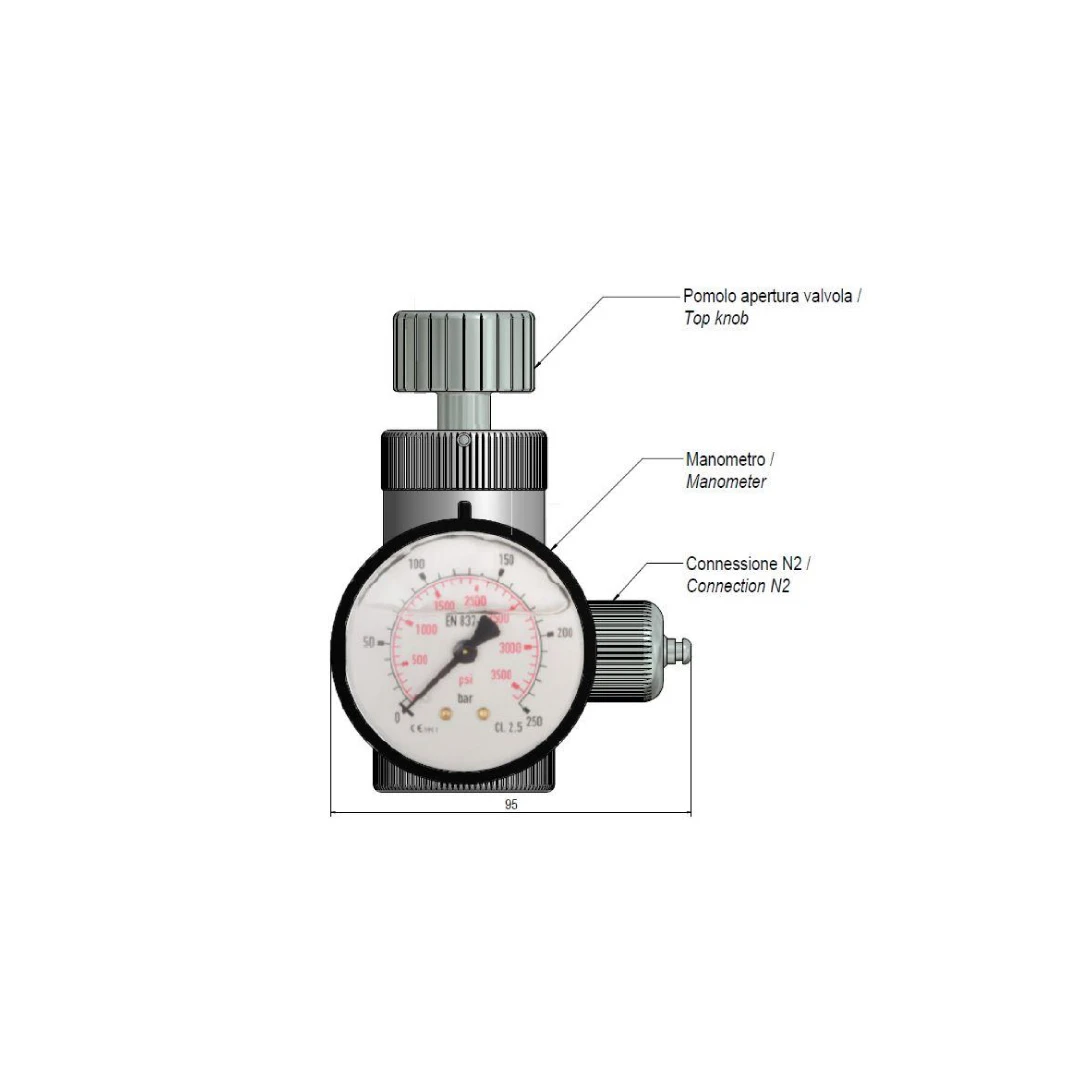
 FOX AR Series Charging and Testing Unit
The FOX AR Series Charging and Testing Unit is an essential technical instrument for professionals in the hydraulic sector. This device has been specifically designed to perform nitrogen pressure checking and restoration operations inside accumulators and dampers with maximum precision. Thanks to its robust architecture, the unit supports a maximum working pressure of up to 1000 bar, making it suitable for high-pressure industrial applications.
Construction Features and Standard Equipment
The body of the unit is made entirely of steel, enhanced with a trivalent zinc-plating treatment that ensures excellent protection against wear and corrosive agents over time. The standard version of the device is complete for immediate field use. The supply includes a pressure gauge, also available in special units of measurement depending on specific requirements, a 2.5-metre flexible hose to facilitate positioning operations, and a practical dedicated case for safe transport and storage of the equipment.
Connection Interfaces and Adapters
To ensure full compatibility with existing systems, the device features as standard a 3/8″ BSP-F connection for the nitrogen cylinder side and a 5/8″ UNF connection dedicated to the damper or accumulator side. If the interfaces differ from these standards, specific adapters are available to expand the operational flexibility of the unit:
-
RID132: Reduction from 5/8″ UNF to 1/32″.
-
RID78: Reduction from 5/8″ UNF to 7/8″ UN.
-
RID14: Reduction from 5/8″ UNF to 1/4″ BSP.
Pressure Checking and Reduction
The checking procedures first require verification that there is no pressure in the circuit on which the accumulator is installed. After screwing the device onto the nitrogen valve, the operator unscrews the discharge valve knob and screws in the upper knob until the internal pressure value is displayed on the pressure gauge. If pressure reduction is required, the knob located on the discharge valve must be slowly screwed in until the desired value is reached. At the end of the operation, eliminating the residual pressure inside the unit allows safe disassembly.
Charging and Periodic Checks
The precharge restoration phases require insertion of the quick coupling connected to the dry nitrogen cylinder before opening the upper needle-opening knob. It is essential to carry out charging slowly, allowing the accumulator diaphragm or bladder to progressively adapt to the change in precharge. In terms of active safety, a pressure reducer must always be installed at the cylinder outlet. This vital requirement prevents an incorrect operation from subjecting the accumulator to pressures higher than the maximum allowed by the body, compromising its structural integrity. For maintenance purposes, periodic inspection of the equipment is recommended every six months of operation.
Technical Summary Table