


High-pressure hydraulics represents the operational core of numerous industrial plants, mobile machinery, and heavy-duty applications. Excavators, industrial presses, steel plants, agricultural machinery, and automated systems operate every day under high pressure to achieve greater force, precision, and operating speed.
Increasing pressure allows more power to be generated using more compact components. However, this technical advantage exposes the system to much greater mechanical stress. When the circuit operates beyond certain thresholds, every component becomes critical: hoses, fittings, pumps, valves, and sealing systems must ensure strength, stability, and constant safety.
Choosing reliable high-pressure hydraulic components is not only about performance. It directly affects operator safety, production continuity, and the lifespan of the entire system.
Why High Pressure Increases Risks in Hydraulics
In a hydraulic circuit, pressure works like blood in the cardiovascular system. When it increases too much or is not properly controlled, every element in the circuit undergoes greater stress.
At low pressures, small defects can remain invisible for months. In a high-pressure system, however, even a minor imperfection can quickly turn into a major failure.
An improperly assembled hose, an undersized fitting, or a worn seal can cause sudden leaks, pressure drops, and dangerous failures. In the most critical cases, high-pressure fluid can damage equipment and pose serious risks to operator safety.
High pressure also accelerates internal wear phenomena. Vibrations, pressure spikes, and overheating subject components to continuous cycles of mechanical fatigue.
For this reason, both system design and component selection must follow extremely rigorous criteria.
The Characteristics of High-Pressure Hydraulic Components
Not all hydraulic components are designed to operate under demanding conditions. A high-pressure system requires specific materials, geometries, and manufacturing processes.
Mechanical strength is the first essential requirement. Hoses, fittings, and valves must withstand high pressure without deformation or structural failure.
The quality of internal machining also directly affects performance. Irregular surfaces increase turbulence, friction, and pressure losses, reducing circuit efficiency.
Compatibility with hydraulic fluid is another essential factor. Seals and sealing systems must resist not only pressure but also temperature changes and the chemical properties of the oil.
Finally, components intended for high-pressure applications must guarantee long-term stability. An industrial plant cannot afford sudden performance variations or unplanned downtime.
Hydraulic Hoses: The First Critical Element
Hydraulic hoses represent one of the most sensitive areas in high-pressure circuits. They continuously transport fluid while absorbing vibrations, shocks, and constant pressure variations.
Choosing an unsuitable hose means compromising the entire system.
Operating pressure alone is not enough as an evaluation parameter. Temperature, bend radius, chemical compatibility, and peak pressure must also be considered.
Many failures originate from seemingly trivial mistakes. A hose bent too tightly or installed under tension performs poorly from day one. Vibrations accelerate wear and increase the risk of sudden rupture.
The outer cover also plays an important role. In abrasive environments or areas exposed to contaminants, surface protection largely determines operational lifespan.
The Importance of Proper Fitting Crimping
In high-pressure systems, the most delicate point is often not the hose but the fitting.
Incorrect crimping generates micro-leaks, instability, and structural failures. For this reason, the assembly process must comply with extremely precise parameters.
Crimping tolerances work like those in a high-performance engine: just a few tenths of a millimeter can make the difference between a reliable system and a critical failure.
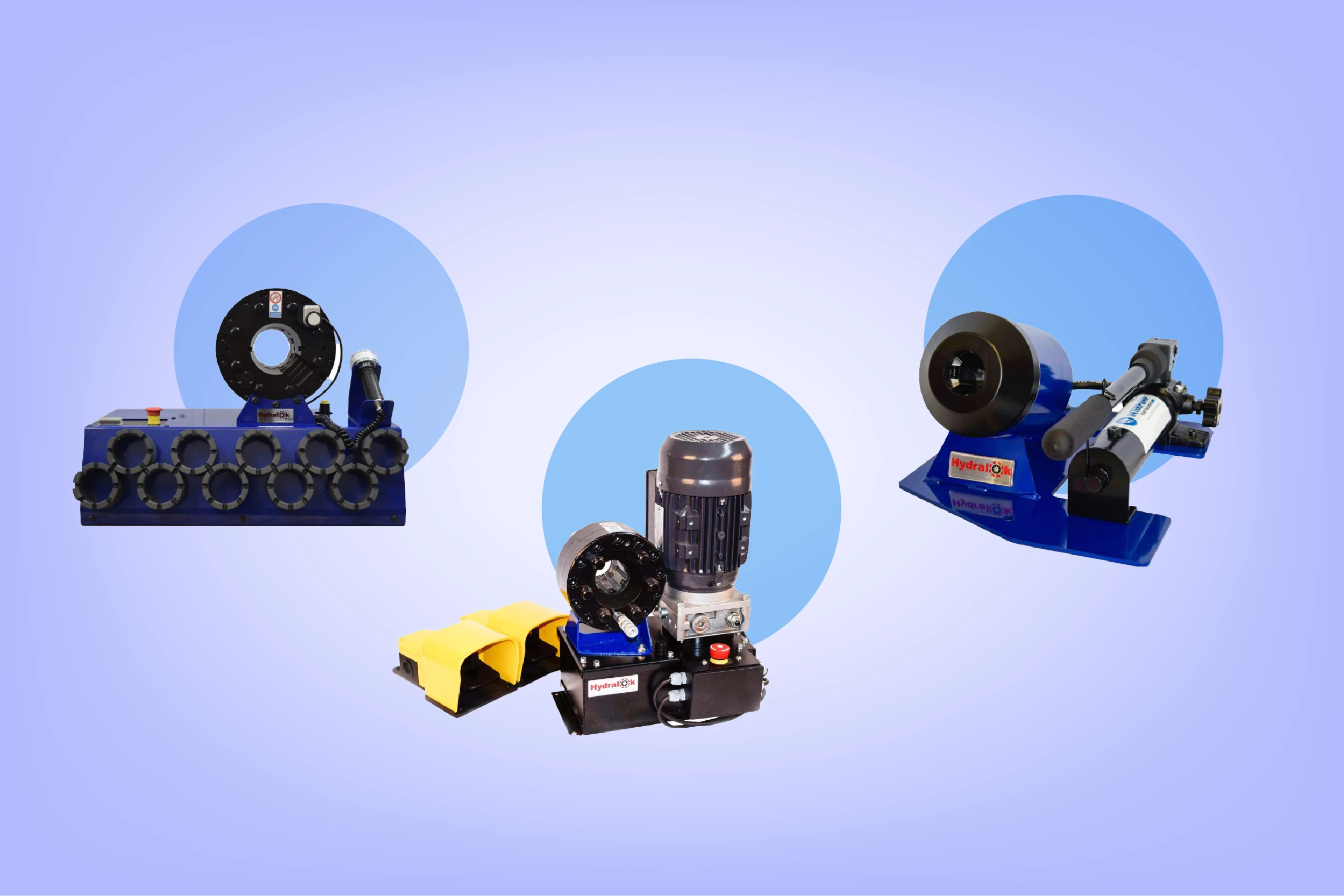
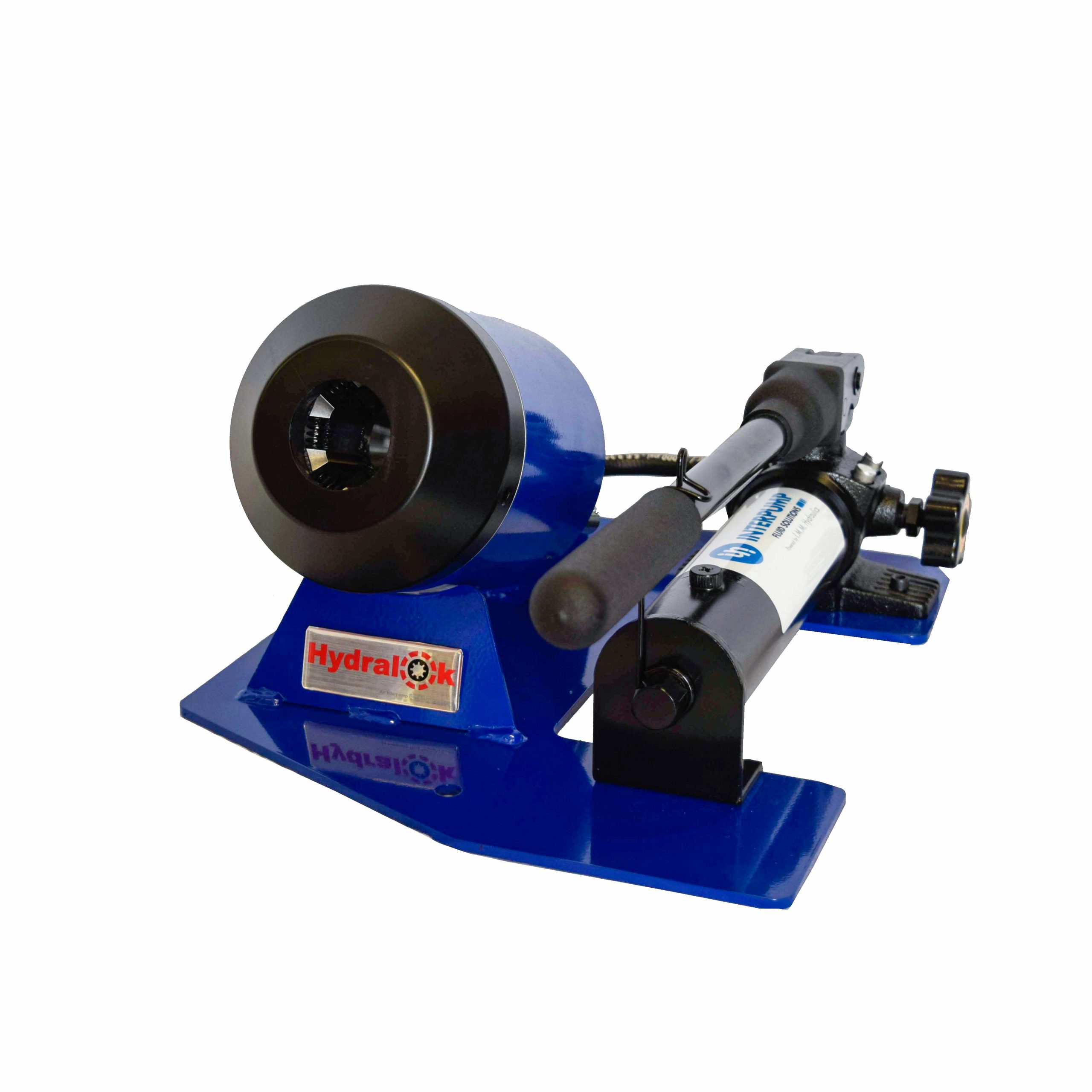
In this context, the use of professional equipment becomes essential. Hydraulic hose crimping machines allow precise and repeatable assemblies to be produced, ensuring safety and operational continuity even in the most demanding applications.
Proper crimping distributes force evenly across the fitting, preventing localized stress points that could lead to failures over time.
Pumps and Valves: Precision Under Pressure
Pumps and valves represent the dynamic core of the hydraulic system. In high-pressure applications, these components operate with extremely tight tolerances and must guarantee absolute precision.
An inefficient pump generates energy losses, temperature increases, and reduced performance. Valves, on the other hand, control the direction, flow rate, and pressure of the fluid. If they operate poorly, the entire system loses stability and operational precision.
Modern applications require increasingly fast response times. For this reason, components must maintain consistent performance even under heavy loads and intensive work cycles.
The quality of internal materials becomes decisive. Special steels, surface treatments, and high-precision machining improve wear resistance and operational lifespan.
High Pressure and Temperature: A Delicate Balance
Pressure and temperature are closely connected.
As pressure increases, the amount of energy generated within the circuit also rises. Part of this energy inevitably turns into heat.
If the system does not dissipate heat properly, the oil loses viscosity and its lubricating capability deteriorates. As a result, friction, wear, and contamination risks increase.
The effect is similar to that of a car engine without adequate cooling. Initially, the system continues to operate, but over time performance collapses and components begin to deteriorate rapidly.
For this reason, thermal control is a central element in high-pressure hydraulics.
How to Identify Inadequate Components
Many systems show clear warning signs before a major failure occurs. The problem arises when these symptoms are underestimated.
Excessive vibrations, abnormal noise, and pressure fluctuations are often the first indicators of undersized or worn components.
Even minimal leaks should never be ignored. A small seepage in a high-pressure circuit can quickly evolve into a critical rupture.
An increase in temperature is another important warning sign. When the system operates too hot, it means some components are dissipating energy inefficiently.
Preventive maintenance makes it possible to identify these issues before they cause downtime or structural damage.
The Role of Preventive Maintenance
Even the best components lose efficiency if the system does not receive proper maintenance.
Preventive maintenance is not limited to periodic component replacement. It means monitoring system behavior and preventing the causes of failures.
Monitoring pressure, temperature, and oil condition makes it possible to detect anomalies long before breakdowns occur.
Even fitting tightening requires periodic inspections. Vibrations and mechanical shocks can gradually loosen connections, increasing the risk of leaks.
Fluid cleanliness is another fundamental aspect. In high-pressure circuits, microscopic particles can quickly damage high-precision valves and pumps.
Today, the most efficient companies adopt predictive maintenance strategies based on sensors and continuous monitoring of operating parameters.
Operational Safety: A Strategic Factor
High-pressure hydraulics leaves no room for improvisation.
Safety depends on the quality of the entire system: design, component selection, installation, and maintenance must work together.
An inexpensive but unsuitable component can generate costs far greater than the initial savings. Downtime, urgent replacements, and collateral damage directly impact company productivity.
Operator safety is also at stake. High-pressure leaks and sudden ruptures represent real risks in complex industrial environments.
For this reason, choosing reliable components means investing not only in performance but also in operational continuity and system protection.
The Evolution of High-Pressure Hydraulics
Modern industry requires increasingly compact, efficient, and high-performance systems. High-pressure hydraulics therefore continues to evolve toward smarter and more reliable solutions.
New materials, advanced monitoring systems, and high-efficiency components now make it possible to operate at high pressures while maintaining lower energy consumption.
Digitalization is also transforming the industry. Smart sensors and predictive maintenance allow real-time monitoring of system behavior, reducing failures and unexpected downtime.
In this scenario, component selection can no longer be based solely on price. Reliability, safety, and build quality are decisive factors in ensuring long-lasting performance and industrial competitiveness.