


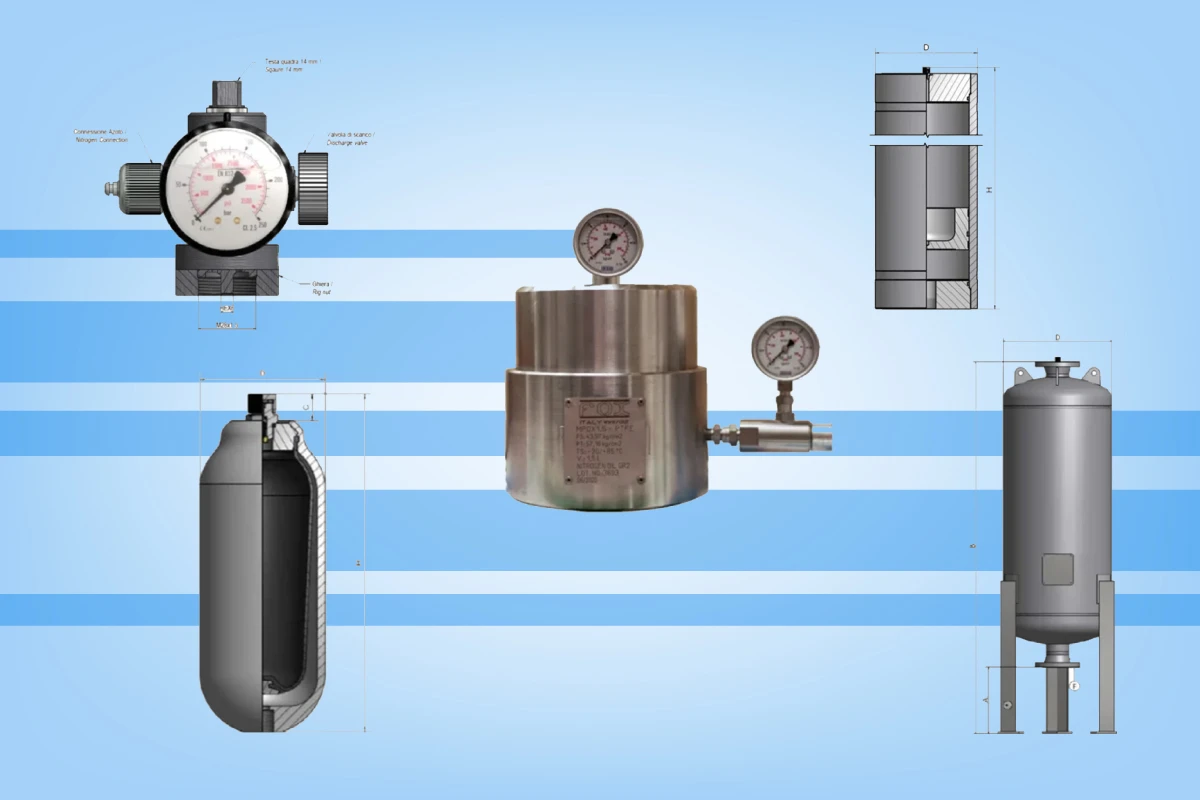
Hydraulic accumulators are the beating heart of an efficient hydraulic system. Without these components, pressure stability, protection against mechanical shocks and energy efficiency would be seriously compromised. In every system where hydraulic fluid operates under pressure, the integration of an accumulator is not just an option, but an operational necessity.
What are hydraulic accumulators?
A hydraulic accumulator is, in essence, a device designed to store energy in the form of pressurised fluid. It uses the compressibility of gases – typically nitrogen – to keep the fluid in the hydraulic system in a state of potential energy ready for use. Imagine a mechanical spring that stores energy when it is compressed and releases it when the force is removed: the accumulator does the same, but using a gas that separates the oil volume. The use of high-quality components, such as those available in the Hydraulic Accumulators section, ensures that the system responds with millimetric precision to load variations, preventing operational instability.
The operating principle: energy storage and damping
Operation is based on a simple physical law: gas occupies much more space than oil at low pressures and can be reduced to a very small volume under high pressures. When the pump sends fluid into the accumulator, it compresses the gas separated by an elastic or mechanical element. This energy reserve allows the system to meet sudden demand peaks without overloading the hydraulic pump, which would otherwise be subjected to excessive stress, leading to fluid overheating and accelerated wear of the internal components. 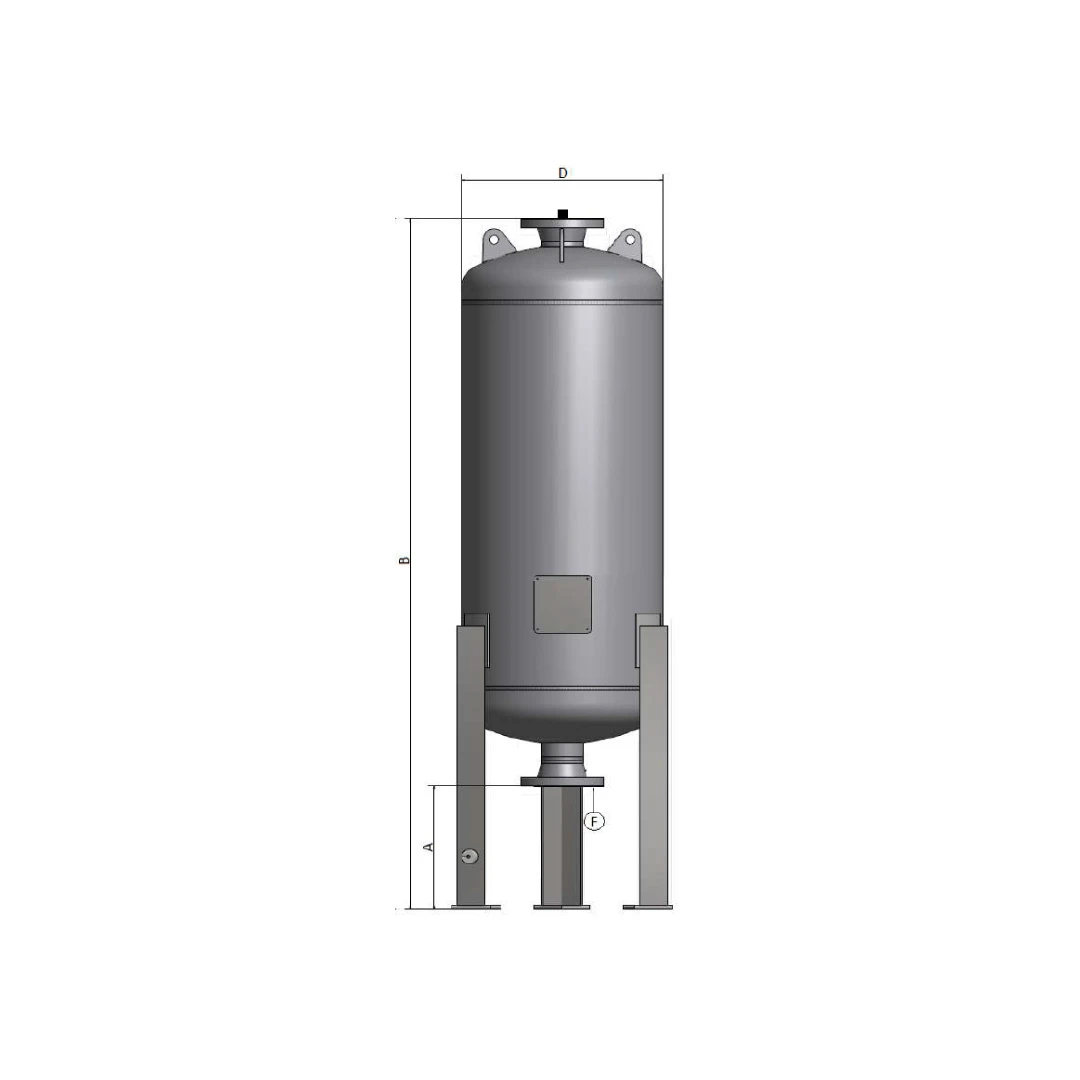
Diaphragm, piston and bladder accumulators: technical differences
The choice of separation technology between gas and oil determines the effectiveness of the accumulator:
- Diaphragm accumulators: Ideal for applications requiring a fast response and compact dimensions. The flexible diaphragm follows volume variations, ensuring excellent sealing and low weight.
- Bladder accumulators: They represent the standard for response speed. The elastomer bladder expands rapidly, making them perfect for damping high-frequency pulsations generated by piston pumps.
- Piston accumulators: They provide clear separation between gas and fluid, making them ideal for high storage volumes and extreme operating conditions where mechanical robustness is essential.
Practical applications: why your system needs one
The added value of an accumulator goes beyond simple energy storage.
Leakage compensation and pressure maintenance
In a closed circuit, micro-leaks or thermal expansion of the fluid can cause pressure drops. The accumulator acts as a buffer, instantly compensating for volume variation and keeping the system within the desired operating pressure window.
Pulsation damping and water hammer protection
Hydraulic pumps, especially piston pumps, generate pressure pulsations that transmit harmful vibrations through pipes and fittings. The accumulator, strategically positioned close to the source, acts as a low-pass filter, absorbing fluctuations and protecting the structural integrity of the entire circuit.
Preventive maintenance: how to avoid machine downtime
A neglected accumulator is a ticking time bomb. Maintenance should not be reactive, but planned with rigour.
Periodic pre-charge pressure checks
Gas pre-charge pressure is the vital parameter. If the pre-charge pressure falls below the nominal value, the accumulator loses effectiveness, allowing the fluid to occupy excessive volume and reducing damping capacity. A quarterly check, supported by certified pre-charge kits, prevents catastrophic failures.
Warning signs: when to replace the diaphragm or bladder
Material fatigue in elastomers is inevitable. Metallic noises, slow system response or oil leakage from the gas side indicate that the diaphragm or bladder has failed. Replacing these wear parts preventively avoids hydraulic system contamination and protects the service life of downstream valves and servocontrols.
How to choose the right accumulator for your application
There is no universal solution. Correct selection requires analysis of the duty cycle, operating temperature, chemical compatibility between the fluid and the elastomer material, and the required compensation volume. An engineering approach based on real data, rather than rough estimates, transforms the accumulator from a passive component into an active performance optimisation tool. Investing in correctly sized components immediately results in reduced energy costs, increased production line reliability and a drastic reduction in extraordinary maintenance interventions.