


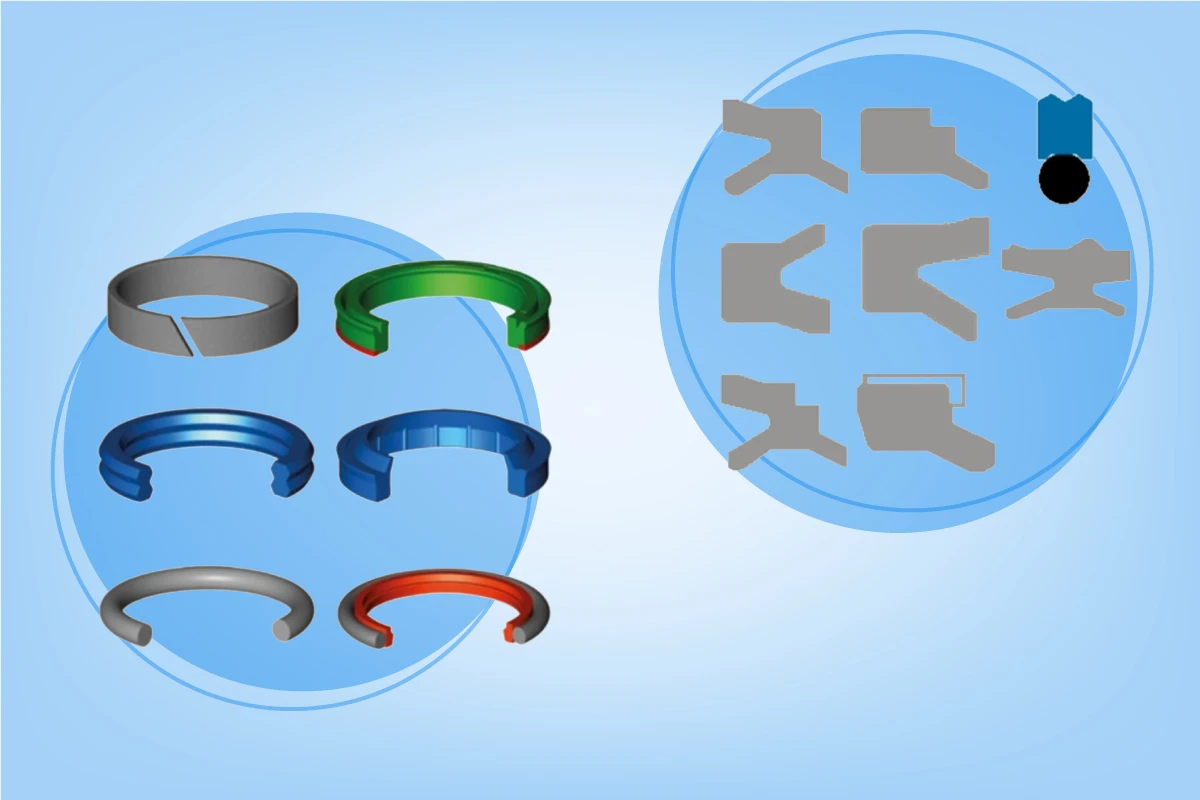
Sealing systems are the critical boundary between the operational efficiency of a hydraulic system and its sudden shutdown. Many technicians make the mistake of considering seals and wipers as simple consumables, to be replaced only in the event of an obvious leak. This reductive view overlooks the fact that these components play an active role in energy management, friction control and circuit protection against external contaminants. Premature seal failure is almost always the symptom of an inadequate selection in relation to the actual operating conditions, not an intrinsic limitation of the material.
The Anatomy of an Efficient Seal: Beyond Rubber
Every sealing system is an engineered component that must operate in a dynamic balance between pressure, temperature and sliding speed. When we talk about sealing systems, we refer to a coordinated set of elements: rod seals, piston seals, wiper rings and guide rings.
The correct operation of the system depends on the synergy between these elements. For example, if the guide rings are worn or undersized, the piston does not maintain the correct concentricity inside the barrel. This misalignment creates an asymmetrical load on the seal, which is pushed against one wall with excessive force, leading to accelerated wear and, inevitably, fluid leakage.
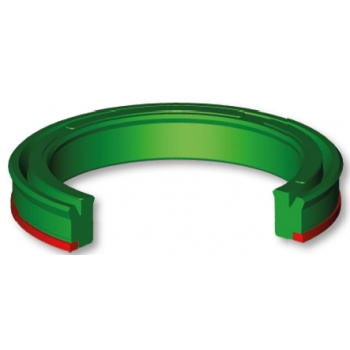
Critical Factors in Material Selection
Selecting the correct elastomer or polymer is the first step in avoiding systematic failures. Each material reacts differently to the chemical aggression of the oil and to thermal stress.
Chemical Compatibility and Temperature
Hydraulic oil, especially if contaminated or subject to oxidative degradation, can alter the mechanical properties of a seal. An incompatible material may swell, increasing friction and causing overheating, or, conversely, harden and lose the resilience required to follow the imperfections of the metal surface. The operating temperature range must not be considered as a theoretical value from a technical data sheet, but as a real value that takes into account the heat peaks generated by energy dissipation within the system.
The Challenge of Extrusion
Many failures occur due to extrusion. When fluid pressure exceeds the sealing capacity of the material, the elastomer is “pushed” into the gap, or radial clearance, between the moving mechanical parts. This phenomenon turns the seal surface into a kind of frayed sheet. To counter extrusion, it is essential to analyse not only peak pressure, but also the radial clearance between the coupled parts. Where pressure is high, the use of anti-extrusion rings, often made from technical plastics such as filled PTFE, is the only way to ensure system longevity.
Predictive Maintenance: Reading the Signals Before Failure
A proactive approach to maintenance turns downtime costs into investments in productivity. Monitoring the condition of sealing systems means critically observing cylinder behaviour and oil quality.
The Importance of Wiper Action
The wiper ring is often the most overlooked component, yet it is the first line of defence. In dusty or humid industrial environments, even minimal infiltration of foreign particles along the returning rod can contaminate the entire hydraulic fluid. Once the contaminant enters the circuit, it acts as an internal abrasive, compromising the polished surfaces of pistons and barrels. Periodically replacing the wiper, even when it appears visually intact, is a low-cost operation that preserves the integrity of the entire system.
Leakage Analysis: Not All Leaks Are the Same
An oil leak is not only an environmental or cleanliness issue; it is a diagnostic indicator. A constant leak suggests structural seal failure or lip wear. An intermittent leak, appearing only under certain loads, may indicate mechanical deformation of the rod or vibrations caused by an inefficient guide system. Analysing where and when oil leaks makes it possible to identify the root cause, avoiding replacement of the component without solving the problem that caused its deterioration.
Optimising Operating Performance
To increase the reliability of a hydraulic machine, the designer must view sealing systems as components that control the energy of the system.
- Friction Management: An oversized seal, although it ensures the complete absence of leaks, generates unnecessary friction. This friction turns into heat, which in turn degrades the oil and, consequently, the seal itself. The goal is always the right compromise between sealing and smooth sliding.
- Surface Quality: No seal, however advanced, can compensate for a rough or damaged sliding surface. The roughness of the barrel and rod must comply with strict standards. Small scratches, invisible to the naked eye, become escape channels for high-pressure oil. Polishing and protecting metal surfaces are complementary to seal selection.
- Spare Parts Planning: Seal installation is a critical moment. An approximate assembly, which pinches the lip or deforms it during insertion, causes premature failure before the machine is even put into service. Using dedicated assembly tools and correctly lubricating each seat before insertion are practices that distinguish an expert maintenance technician.
The management of sealing systems is not a matter of isolated components, but an integrated discipline. It requires a deep understanding of mechanics, fluid dynamics and material chemistry. Investing time in the correct technical selection and constant monitoring is not a cost, but the most effective strategy to eliminate unexpected machine downtime and ensure that the system always delivers its maximum power with minimum energy loss.