


No modern hydraulic system can operate reliably without proper thermal management. During the operation of a hydraulic power unit, a significant portion of the mechanical energy supplied by the drive motors is inevitably converted into heat. Pressure losses across valves, internal friction within pumps, and restrictions in piping continuously increase the temperature of the hydraulic fluid. Without a system capable of continuously dissipating this excess thermal energy, the hydraulic fluid rapidly deteriorates, compromising mechanical performance and leading to catastrophic failures throughout the entire system.
Precise temperature control is therefore essential to preserve the oil’s viscosity, extend the service life of elastomeric seals, and ensure consistent and repeatable industrial operating cycles.
The Role of Heat Exchangers in Hydraulic Systems
Heat exchangers play a strategic role in maintaining the thermal balance of hydraulic circuits. They remove the heat generated by fluid friction and mechanical inefficiencies, transferring it to a secondary cooling medium such as air or water.
Keeping hydraulic oil within its optimal operating temperature range—generally between 40°C and 55°C—prevents the system from entering a vicious cycle of degradation. Oil that becomes too hot loses its ability to maintain an effective lubricating film between moving metal surfaces. Conversely, oil that is too cold becomes excessively viscous, increasing start-up energy consumption and causing dangerous cavitation phenomena at the pump suction ports.
By installing properly sized heat exchangers, system designers and maintenance technicians stabilize the dynamic response of hydraulic cylinders and motors, preventing unplanned downtime and reducing overall operating costs.
Common Causes of Overheating in Hydraulic Circuits
Understanding the sources of heat buildup is the first step in designing an effective cooling strategy. Heat inside a hydraulic power unit is never generated by chance; it is the direct result of hydraulic or mechanical inefficiencies.
Energy Losses, Pressure Relief Valves, and Internal Leakage
The primary cause of overheating is wasted hydraulic energy. When a high-pressure pump delivers more flow than the actuators require, the excess fluid is diverted back to the reservoir through the pressure relief valve. This pressure drop at constant flow converts virtually all unused hydraulic energy into heat.
Similarly, internal leakage caused by worn pistons, valve assemblies, and seals produces the same effect. Imagine high-pressure oil escaping through a clearance only a few microns wide: the throttling effect acts like an electrical resistor, instantly increasing the local temperature and accelerating the degradation of the oil returning to the reservoir.
Oil Viscosity, Thermal Degradation, and Oxidation
Viscosity measures a fluid’s resistance to flow. It can easily be understood by comparing the behavior of water with that of honey: honey requires significantly more force to stir because of its higher internal molecular friction.
When oil temperature exceeds its design limits, viscosity drops dramatically. The fluid becomes excessively thin and loses its ability to create the microscopic lubricating film that prevents direct metal-to-metal contact between moving components. The resulting boundary friction generates even more heat, triggering oil oxidation. Oxidation produces sludge, varnish, and carbon deposits that clog filters, stick valve spools, and foul heat transfer surfaces, further reducing cooling efficiency.

Types of Heat Exchangers: Technologies and Applications
Selecting the most suitable cooling technology depends on the cooling resources available at the facility (mains water, cooling towers, or ambient air), the amount of heat that must be dissipated, and the environmental operating conditions.
Air-to-Oil Heat Exchangers (Oil Coolers)
Air-to-oil heat exchangers use ambient air to cool hydraulic fluid. The oil flows through an aluminum core equipped with internal and external fins designed to maximize the heat transfer surface, while a fan driven by an electric or hydraulic motor forces air through the cooling core.
- Advantages: They do not require a water cooling circuit, have relatively low installation costs, and are ideal for mobile machinery or standalone hydraulic systems.
- Applications: Earthmoving equipment, outdoor molding presses, construction-site hydraulic power units, and installations where water is unavailable or prohibitively expensive.
Water-to-Oil Plate and Shell-and-Tube Heat Exchangers
Water-to-oil heat exchangers use water as the cooling medium. Since water has a significantly higher heat capacity than air, these units deliver exceptionally high heat transfer efficiency within extremely compact dimensions.
- Plate Heat Exchangers (Brazed or Gasketed): Consist of a series of shaped stainless steel plates stacked together. Oil and water flow through alternating counterflow channels, providing maximum heat transfer efficiency while minimizing installation space.
- Shell-and-Tube Heat Exchangers: Consist of an outer shell containing a bundle of copper or cupronickel tubes. Oil flows around the tubes, guided by internal baffles, while water circulates inside the tubes. They are the preferred solution for high-pressure applications, aggressive fluids, and demanding industrial environments.
Heat Exchanger Selection and Sizing Criteria
Properly sizing a heat exchanger requires a thorough analysis of the hydraulic system’s operating parameters. An undersized unit leads to chronic overheating, while unnecessary oversizing results in excessive costs and unnecessary space requirements.
To select the most suitable unit, the following factors must be carefully evaluated:
- Heat Load to Be Dissipated (kW): This corresponds to the portion of electrical or mechanical power converted into heat. As a general rule, in well-designed industrial systems, the heat to be dissipated typically ranges between 20% and 30% of the installed prime mover power.
- Fluid Flow Rate (L/min): The volume of oil passing through the heat exchanger directly affects fluid velocity within the channels and the resulting pressure drop between inlet and outlet.
- Oil Inlet Temperature and Cooling Medium Temperature: The temperature differential between the hot hydraulic oil and the cooling medium (ambient air or water) determines the overall heat transfer efficiency.
- Operating Pressure and Pressure Peaks: The heat exchanger must withstand the pressures present in the return line or dedicated offline cooling circuit, including hydraulic shocks and pressure spikes generated during flow reversal.
Integration into Hydraulic Systems: Return Line vs. Offline Cooling Circuit
The way a heat exchanger is integrated into a hydraulic system has a direct impact on both its cooling efficiency and its service life.
Installation on the Return Line
The heat exchanger is installed along the line that returns hydraulic oil from the actuators to the reservoir.
- Pros: It utilizes the existing flow within the hydraulic circuit without requiring an auxiliary motor.
- Cons: The heat exchanger is exposed to pressure spikes and hydraulic shocks generated by directional control valves. It must therefore be protected by a parallel bypass (check) valve, typically set between 2 and 6 bar, to safeguard the cooling core from excessive cold-start pressures.
Installation in an Auxiliary Offline Cooling Circuit
This configuration uses a dedicated motor-driven pump that draws oil from the reservoir, passes it through a fine filtration system and a heat exchanger, and then returns the conditioned oil back to the tank.
- Pros: It provides a constant flow independent of the machine’s operating cycles, protects the heat exchanger from pressure spikes, and combines continuous cooling with fine filtration.
- Cons: It requires additional installation space and a higher initial investment for the auxiliary pump-motor assembly.
Predictive Maintenance for Effective Temperature Control
A cooling system can maintain its performance over time only if supported by a properly planned maintenance program. The accumulation of dirt on heat transfer surfaces is the primary factor that reduces cooling efficiency.
Cleaning Air-to-Oil Cooling Cores and Flushing Water-to-Oil Heat Exchangers
In air-to-oil heat exchangers, dust, oil mist, and airborne debris accumulate on the aluminum fins, creating an insulating layer that restricts airflow. The cooling core should be cleaned periodically using compressed air blown opposite to the fan’s airflow direction or with low-pressure washing equipment and suitable degreasing agents.
In water-to-oil heat exchangers, limescale, algae, and mineral deposits can build up inside the tubes, reducing the effective flow area and insulating the cooling surfaces. Counterflow chemical descaling restores the original internal finish of the tubes and recovers optimal heat transfer performance.
Inspection of Thermostatic Valves and Temperature Sensors
Thermostatic valves divert the hydraulic oil through the heat exchanger only after the operating temperature has been reached. Verifying the correct operation of the thermostatic element and periodically calibrating thermostats and PT100 temperature sensors ensures that the oil always operates within the ideal temperature range, protecting the system against thermal shock.
Thermal Management Solutions Offered by LubeTeam Hydraulic
Treating hydraulic oil as a critical mechanical component requires a partner capable of providing complete, customized solutions. LubeTeam Hydraulic selects and distributes leading international brands such as Emmegi and Alfa Laval, offering integrated technical support from the initial thermal analysis through to final commissioning.
The company’s product range includes:
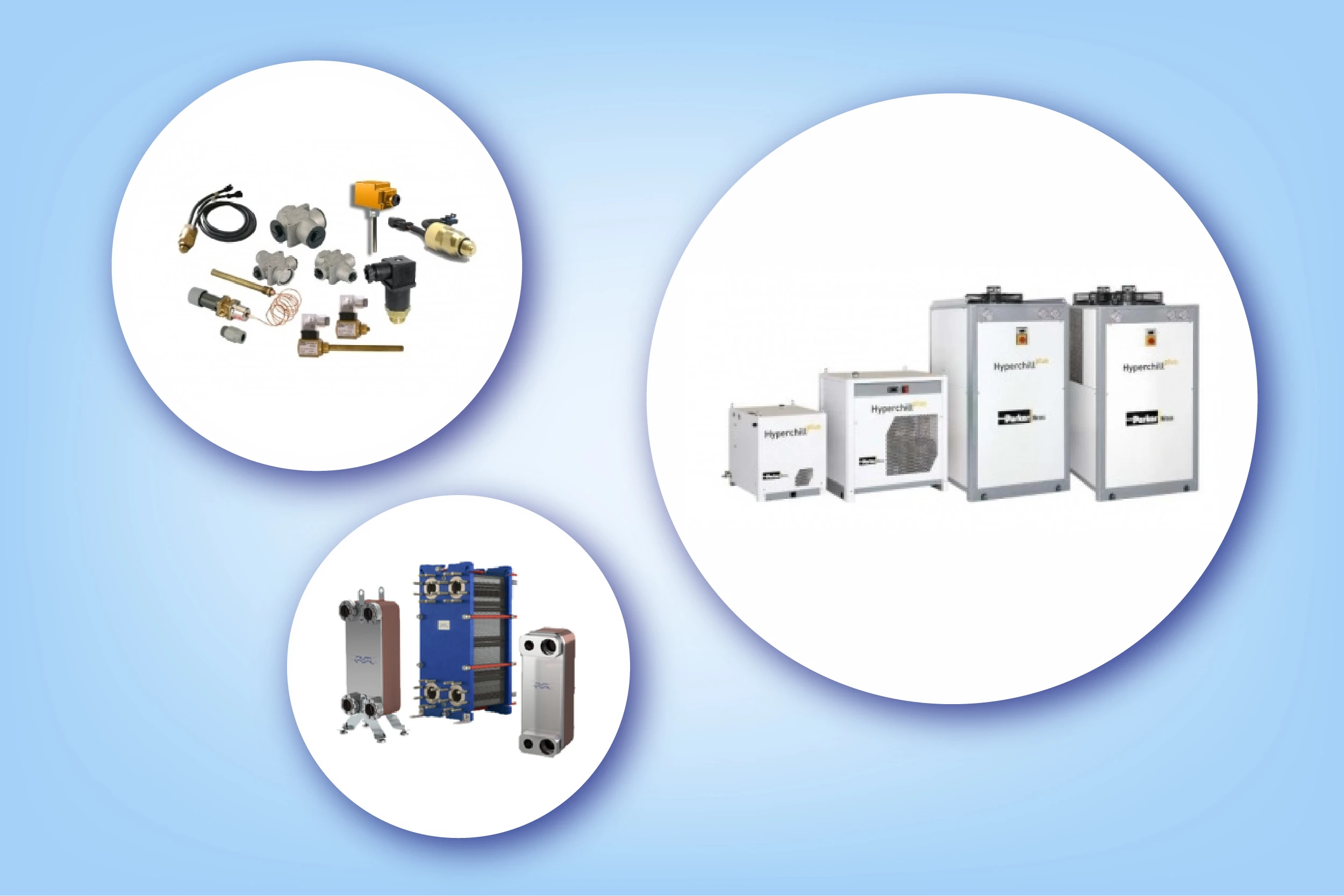
- Air-to-Oil and Water-to-Oil Heat Exchangers: Standard and custom-engineered solutions designed to meet every industrial and mobile cooling requirement.
- Industrial Chillers and Refrigeration Units: Stand-alone cooling systems ideally suited for high-precision applications where extremely stable fluid temperature control is required.
- Accessories and Control Components: Thermostatic valves, connection flanges, anti-vibration mounting kits, and control systems designed to maximize energy efficiency.
- Refurbishment and Cleaning Services: Disassembly, chemical flushing, pressure testing, and seal replacement to restore worn heat exchangers to full operating condition.
Partnering with hydraulic specialists protects the entire production system, transforming cooling from a simple operating expense into a strategic asset for improving the efficiency, reliability, and longevity of industrial machinery.