


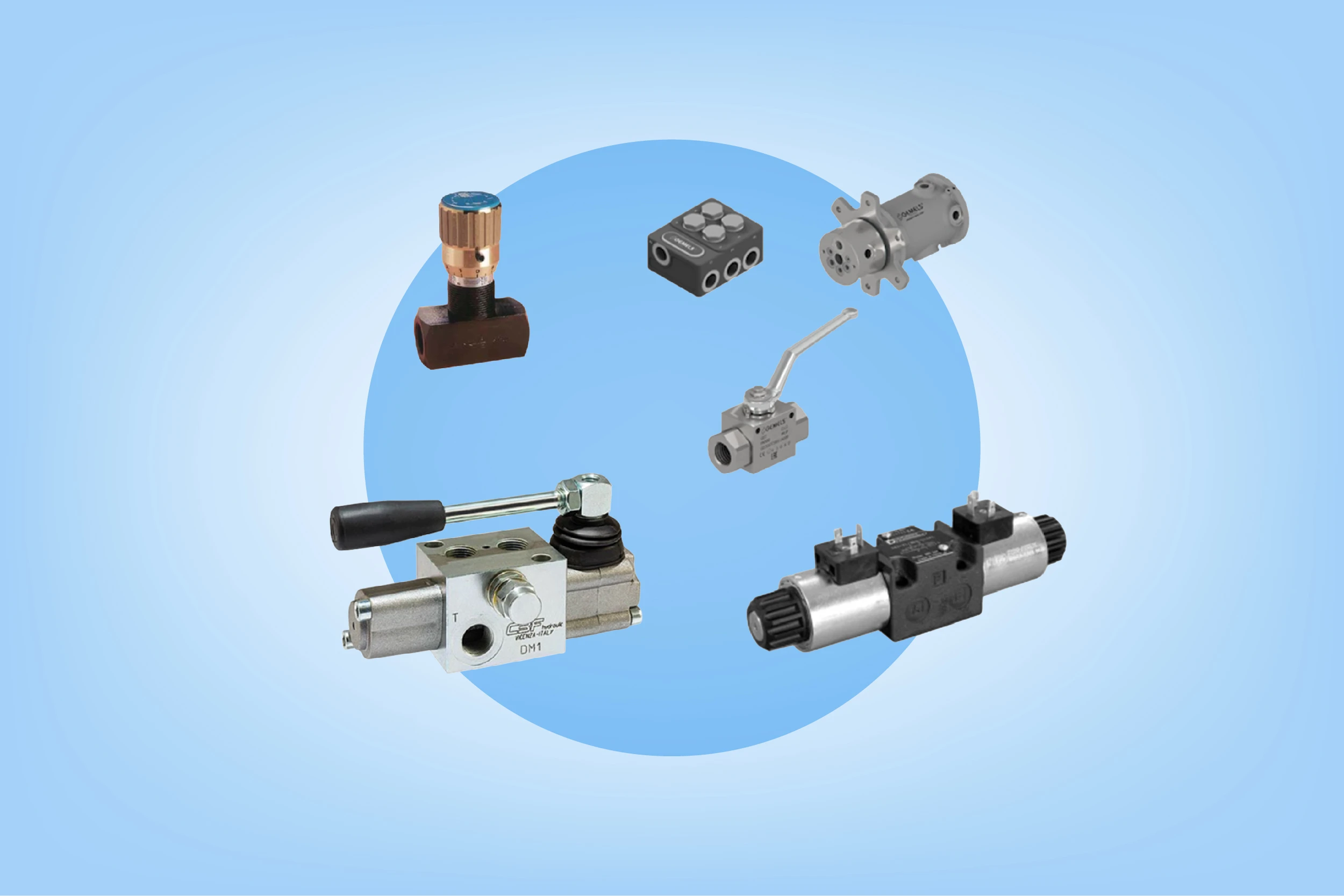
Hydraulic valves are essential components in industrial hydraulic circuits. They regulate pressure, control oil flow, and manage flow direction, ensuring the proper operation of machinery and equipment.
Selecting the most suitable valve depends on the system’s characteristics and operating conditions. Pressure, flow rate, temperature, and actuation method are among the parameters to consider to ensure reliable operation.
Understanding the main types of hydraulic valves and their selection criteria helps identify components that meet the circuit’s requirements, reducing the risk of malfunctions and maintenance interventions.
What Are Hydraulic Valves and How Do They Work?
Hydraulic valves control the behavior of fluid within a hydraulic circuit by regulating pressure, flow rate, and flow direction.
In a hydraulic system, the pump generates the flow required for operation, while pressure depends on the resistance the fluid encounters during operation.
Valves make it possible to manage these conditions by performing various functions:
-
Pressure regulation: they limit or control pressure in specific sections of the circuit.
-
Flow control: they adjust the amount of oil passing through a component, influencing actuator speed.
-
Directional control: they direct the fluid through different paths within the system.
-
Flow shut-off: they allow or prevent oil from flowing.
Each function requires specific design characteristics. For this reason, valve selection should begin with the role the component will perform within the system.
Main Types of Hydraulic Valves
Hydraulic valves are primarily classified according to the function they perform within the circuit.
Pressure Control Valves
Pressure control valves manage pressure levels within the hydraulic system.
The most common types include pressure relief valves, which open a discharge path when pressure reaches the set value, and pressure reducing valves, which maintain downstream pressure at a lower level than the available upstream pressure.
These components help protect the circuit and ensure the proper operation of hydraulic equipment.
Flow Control Valves
Flow control valves regulate the amount of oil passing through a specific passage.
This function makes it possible to control the movement speed of hydraulic cylinders and motors.
Throttle valves adjust the flow passage area, while pressure-compensated flow control valves help maintain a more stable flow rate even when pressure conditions vary, within the limits specified by the manufacturer.
Check Valves
Check valves allow oil to flow in one direction while preventing flow in the opposite direction.
They are used in circuits that require control of reverse fluid flow.
Pilot-operated versions also allow flow in the normally blocked direction through a dedicated pilot pressure signal.
Shut-Off and Load-Holding Valves
Shut-off valves allow a hydraulic flow path to be opened or closed. Ball valves, for example, use a rotating element to allow or stop oil flow.
Load-holding valves, on the other hand, perform specific actuator control functions.
These include overcenter valves, which help control overrunning loads and prevent uncontrolled acceleration under the operating conditions defined by the system design.
How to Choose Hydraulic Valves
Selecting a valve requires evaluating several technical parameters. Checking connection dimensions alone is not enough: the component must also be compatible with the actual operating conditions.
Operating Pressure
Each valve has pressure limits specified by the manufacturer.
It is important to check not only the system’s nominal pressure but also any pressure peaks that may occur during operation.
A valve that is not suitable for the operating pressure conditions can compromise circuit reliability and component service life.
Flow Rate and Pressure Drop
Flow rate indicates the volume of oil passing through the valve per unit of time.
A component must be capable of handling the required flow rate without generating excessive pressure drops.
When oil encounters high flow resistance, part of the hydraulic energy is converted into heat, potentially affecting system efficiency.
For proper selection, it is essential to consult the technical specifications and performance curves provided by the manufacturer.
Oil Viscosity and Temperature
Viscosity indicates the oil’s resistance to flow and varies primarily with temperature.
When temperature decreases, oil generally becomes more viscous and encounters greater resistance as it flows. When temperature increases, the fluid tends to become less viscous.
These variations affect pressure drops and component behavior.
The valve must therefore be compatible with the hydraulic fluid used and the system’s operating temperatures.
Actuation Method and Installation
Valves can be manually, mechanically, electrically, or hydraulically actuated.
The choice depends on the application, frequency of use, and automation requirements.
It is also necessary to consider the mounting configuration, available installation space, and compatibility of the connections with the existing circuit.
Hydraulic Valve Maintenance: Common Problems and Inspections
Proper maintenance helps preserve valve efficiency and prevent malfunctions.
One of the main causes of problems is oil contamination. Solid particles and impurities can interfere with the movement of internal components, causing sticking, sealing problems, or irregular regulation.
Wear on internal surfaces can also compromise performance, causing internal leakage and difficulties in maintaining pressure.
To reduce these risks, it is important to:
-
Periodically check the condition of the oil and filtration systems.
-
Inspect for external leaks and operating irregularities.
-
Monitor pressure and temperature during operation.
-
Follow the manufacturer’s inspection and maintenance instructions.
When malfunctions occur, diagnosing the entire circuit helps identify the underlying causes before replacing the valve.
Before carrying out any maintenance work, qualified personnel must ensure the system is safely isolated and verify that no hazardous residual pressure remains.
LubeTeam Hydraulic Valves: Available Solutions
LubeTeam Hydraulic offers a range of Hydraulic Valves for various industrial applications, selecting components designed to meet different circuit control and regulation requirements.
The product range includes solutions from CBF, Gemels, and Tognella, with components designed for pressure control, flow regulation, and oil flow management.
Selecting the most suitable component requires an assessment of the system’s characteristics and the product’s technical specifications.
Drawing on its industry experience, LubeTeam Hydraulic supports professionals in selecting hydraulic solutions that meet their application requirements, helping improve system reliability and efficiency.