


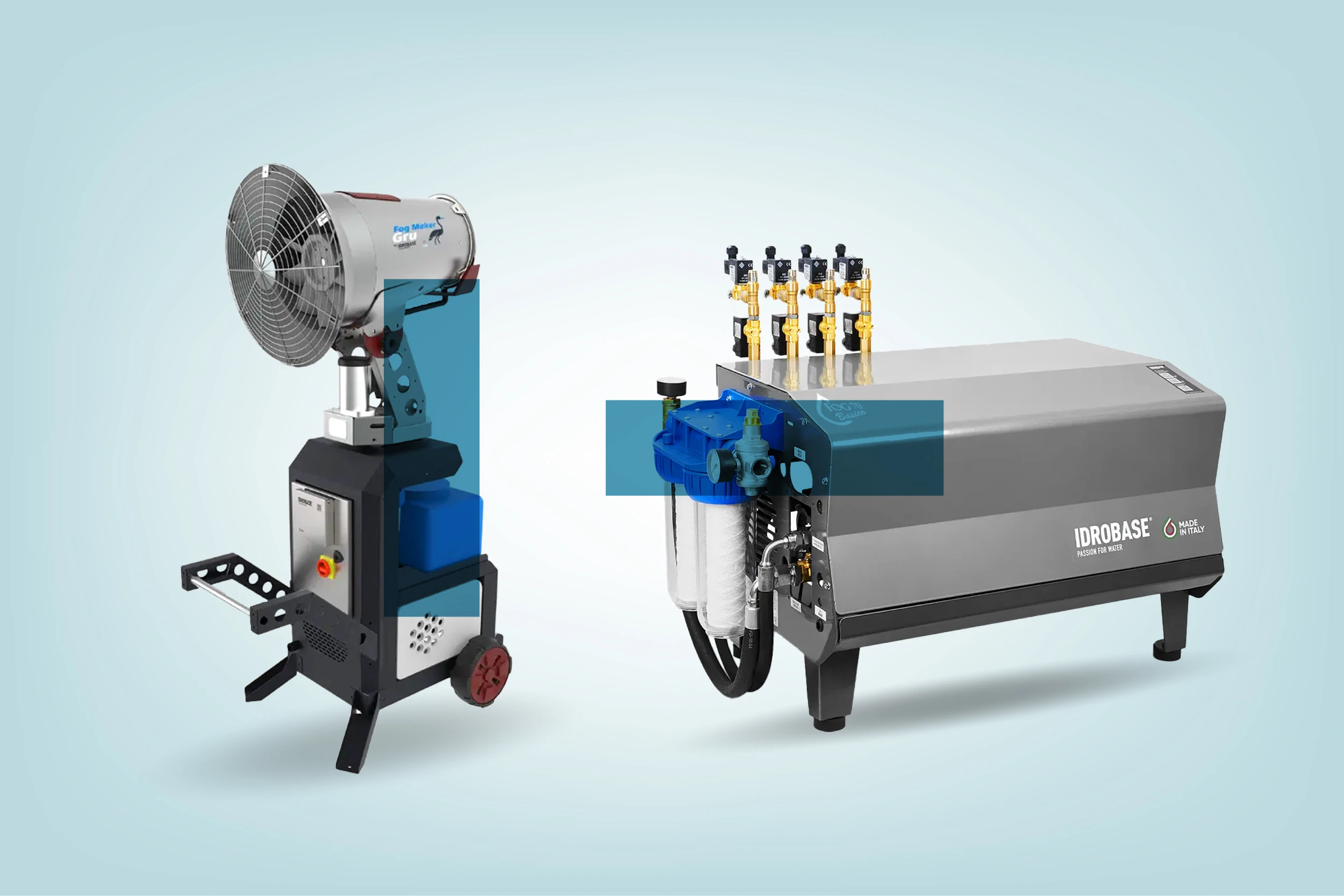
In demolition sites, dust is not merely a side effect of operations. It represents an operational, health, environmental, and economic risk. Every phase of demolition, crushing, and material handling generates fine particulate matter that disperses rapidly, reducing visibility, accelerating machine wear, and compromising operator safety. Managing dust suppression does not simply mean complying with regulations. It means making the site more efficient, sustainable, and controllable.
Dust in demolition sites: origin and critical issues
How particulate matter is generated
During mechanical demolition, structural materials are subjected to intense stress. Concrete, masonry, asphalt, and plaster break down into particles of varying sizes. The finest fractions, often smaller than 10 microns, remain suspended in the air for long periods. Wind and vehicle traffic amplify dispersion. Dust easily crosses site boundaries and reaches sensitive areas such as roads, residential buildings, and industrial activities.
Impacts on health and safety
Inhalable dust penetrates deep into the respiratory system. Prolonged exposure increases the risk of occupational diseases and requires constant use of personal protective equipment (PPE). Reduced visibility increases the risk of accidents, especially in the presence of heavy machinery and suspended loads. A dust-saturated environment slows operations and increases operational stress.
Regulations and responsibilities of the site manager
Environmental regulations and workplace safety laws impose strict limits on dust emissions. The site manager must demonstrate the adoption of adequate technical measures to contain them. Failure to control dust can result in administrative penalties, suspension of activities, disputes with authorities and citizens, and reputational damage. An effective dust suppression system therefore becomes a tool for legal protection as well as operational efficiency.
Principle of dust suppression: the physical logic
Dust is controlled by increasing its weight. Dust suppression technologies use water to bind suspended particles and cause them to fall to the ground. The finer and more uniform the water droplet, the greater the contact surface with the particulate matter.
Dust suppression technologies in demolition sites
High-pressure misting systems
High-pressure misting is one of the most effective solutions. Specialized nozzles transform water into microdroplets that remain suspended and intercept dust particles. The main advantages include high suppression efficiency, reduced water consumption, and uniform coverage of the work area. These systems are ideal for controlled demolitions and localized crushing operations.
Dust suppression cannons
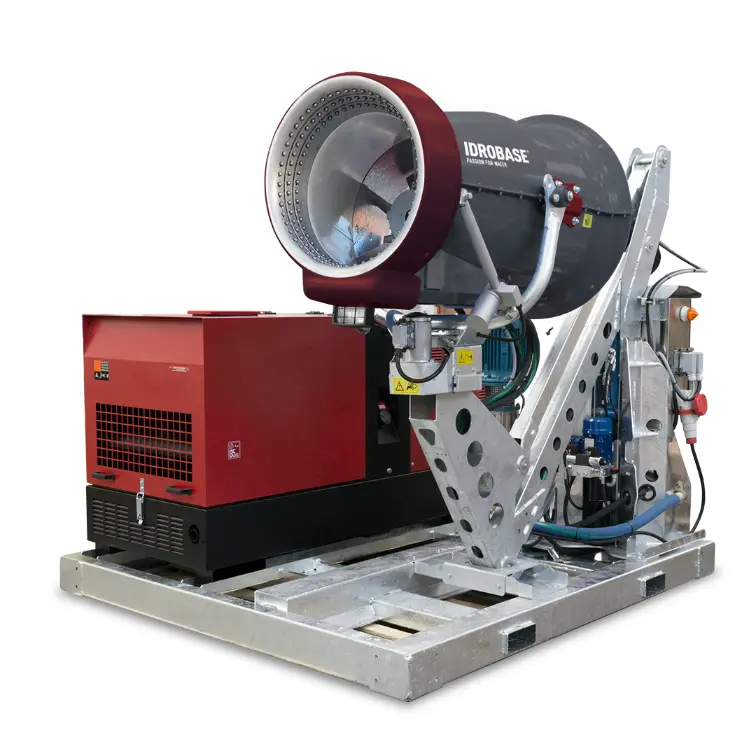
Dust suppression cannons combine ventilation and misting. They project a cloud of micronized water over distances exceeding 30–40 meters. They are used in large demolition sites, inert material recycling plants, and extensive areas with high dispersion. Adjustable orientation allows the spray to be adapted to wind conditions and operational phases.
Fixed and integrated systems
In industrial environments or long-term sites, dust suppression can be integrated directly into processing lines. Conveyor belts, crushers, and discharge points become controlled nodes. This solution reduces manual intervention and ensures continuous performance.
Operational benefits of dust suppression
Improved site efficiency
A less dust-saturated environment allows operators to work longer and with greater precision. Machinery maintains consistent performance and reduces wear on filters and components.
Reduction of indirect costs
Dust suppression reduces maintenance costs, premature component replacement, and unplanned downtime. The initial investment translates into measurable operational savings.
Better relationship with the surrounding area
A site that controls emissions improves relationships with authorities, residents, and clients. Fewer reports and complaints become a competitive advantage, especially in urban contexts.
Sustainability and responsible site management
Dust suppression contributes to more sustainable demolition management. It reduces environmental impact and promotes the reuse of inert materials by keeping them cleaner and easier to sort. Sustainability is not only environmental—it is also economic and organizational.
LubeTeam dust suppression solutions
LubeTeam offers solutions designed to integrate into the most complex operational environments. The approach combines hydraulic expertise, component reliability, and an application-oriented vision. The solutions available in the dust and odor suppression section meet the needs of modern sites: modularity, robustness, and ease of integration with existing systems.
How to choose the most suitable technology
The choice of system depends on site size, type of demolition, environmental conditions, and duration of operations. A preliminary technical analysis helps avoid oversizing or ineffective solutions. Dust suppression in demolition sites is not an ancillary cost. It is a strategic function that affects safety, productivity, and sustainability. Modern technologies make it possible to control particulate matter in a targeted, efficient way that is compatible with operational requirements. Those who invest in effective suppression systems build cleaner, more reliable, and more competitive sites. The difference lies not only in the technology used, but in the ability to integrate it correctly into the demolition process.