


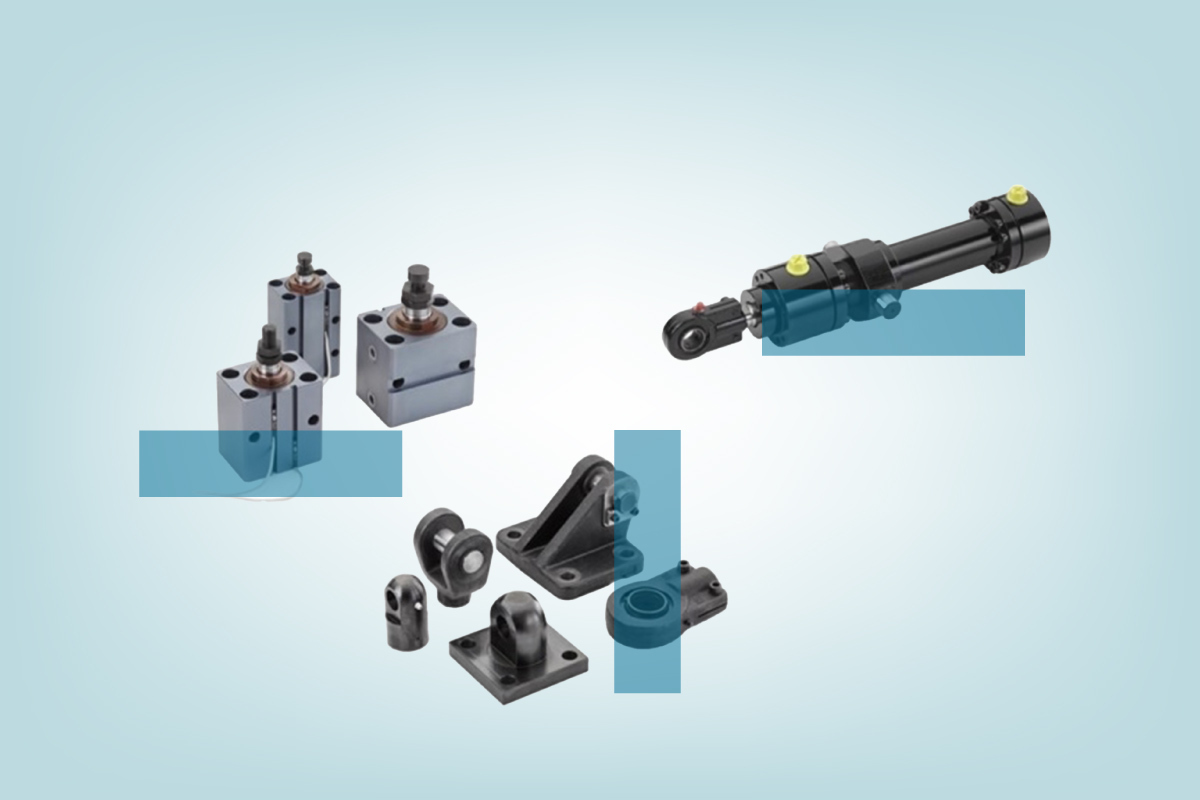
Correct sizing of a hydraulic cylinder directly determines the safety, efficiency, and service life of a hydraulic system. An undersized cylinder will not be able to generate the required force, while an oversized one will lead to unnecessary costs, higher energy consumption, and possible motion control issues.
In industrial and mobile contexts, where precision and reliability are essential requirements, cylinder selection cannot be based on rough estimates. Every operating parameter — load, pressure, speed, stroke, environmental conditions — has a decisive influence on the final result.
Correct sizing makes it possible to achieve a stable, efficient system capable of operating for years without premature failures.
The role of the hydraulic cylinder in hydraulic systems
The hydraulic cylinder converts the energy of pressurized fluid into linear motion. It is the actuator that performs the physical work: lifting, pushing, locking, compressing, or positioning loads.
Unlike hydraulic motors, which produce rotary motion, the cylinder generates direct force along its own axis. This feature makes it indispensable in operating machinery, presses, industrial plants, agricultural equipment, and automation systems.
Its ability to produce force depends mainly on the piston surface area and the fluid pressure. However, in practice, many other factors come into play that determine the actual behavior of the component.
Defining the actual load to be moved
The first step in sizing is to determine precisely the load the cylinder will have to move. This value does not necessarily coincide with the static weight of the object.
It is necessary to consider:
- Mechanical friction in the system
- Any inclinations or levers
- Required accelerations
- Variable external forces
- Dynamic resistance
For example, lifting a load along a vertical guide requires a different force than moving it horizontally. Similarly, a system with pulleys or articulated arms changes the force required on the cylinder.
Overlooking these aspects often leads to cylinders that appear adequate on paper but are insufficient in practice.
Operating pressure and system capacity
The pressure available in the hydraulic circuit is the second fundamental parameter. Every system has operating limits determined by the pump, valves, and safety components.
A cylinder designed to operate at pressures higher than those actually available will never achieve the expected performance.
Conversely, using excessive pressure to compensate for an undersized cylinder can cause oil overheating, accelerated wear, and an increased risk of failure.
Correct sizing comes from the balance between piston surface area and the pressure that can actually be used continuously.
Piston diameter: the key parameter
The internal diameter of the cylinder determines the surface area on which the fluid pressure acts and therefore the force generated.
A larger diameter produces more force, but it also involves:
- Greater required oil volume
- Lower motion speed at the same flow rate
- Greater size and weight
- Higher costs
The choice must therefore balance power and system dynamics. In many industrial applications, an excessively large cylinder slows production cycles and increases energy consumption.
Rod diameter and load resistance
The rod is the part of the cylinder that transmits force to the load. Its diameter must ensure compressive strength and prevent instability phenomena.
When the cylinder works in thrust over long lengths, the rod can behave like a slender column subject to bending. Under these conditions, there is a risk of buckling or bending, especially in the presence of lateral loads.
Correct sizing therefore considers not only axial force but also the geometric mounting conditions.
Stroke length and system stability
The stroke is the maximum distance the rod can travel. This parameter directly affects the structural stability of the cylinder.
Cylinders with long strokes require greater attention during design because they increase the risk of bending, vibration, and misalignment.
In heavy-duty applications, the choice of external guides or suitable supports can be decisive in ensuring the component’s durability.
Movement speed and oil flow rate
The speed of the cylinder depends on the amount of fluid entering the working chamber. A large cylinder requires a higher flow rate to move quickly.
If the pump is not able to provide the required flow, the system will be slow and inefficient. This aspect becomes critical in production lines where cycle time is a decisive economic factor.
Correct sizing therefore integrates cylinder performance with the actual capacity of the hydraulic power unit.
Environmental conditions and operating factors
The working environment and operating conditions significantly influence cylinder selection.
High temperatures can alter oil viscosity and material strength. Dusty or corrosive environments require specific protection for the rod and seals.
The frequency of work cycles also affects the design. A cylinder that operates continuously for many hours a day must dissipate heat and withstand repeated stress.
The role of seals and lubrication
Seals ensure fluid tightness and the separation of internal chambers. An unsuitable choice can cause leaks, pressure drops, and oil contamination.
Lubrication plays an equally critical role. Hydraulic oil not only transmits energy but also reduces friction between moving surfaces.
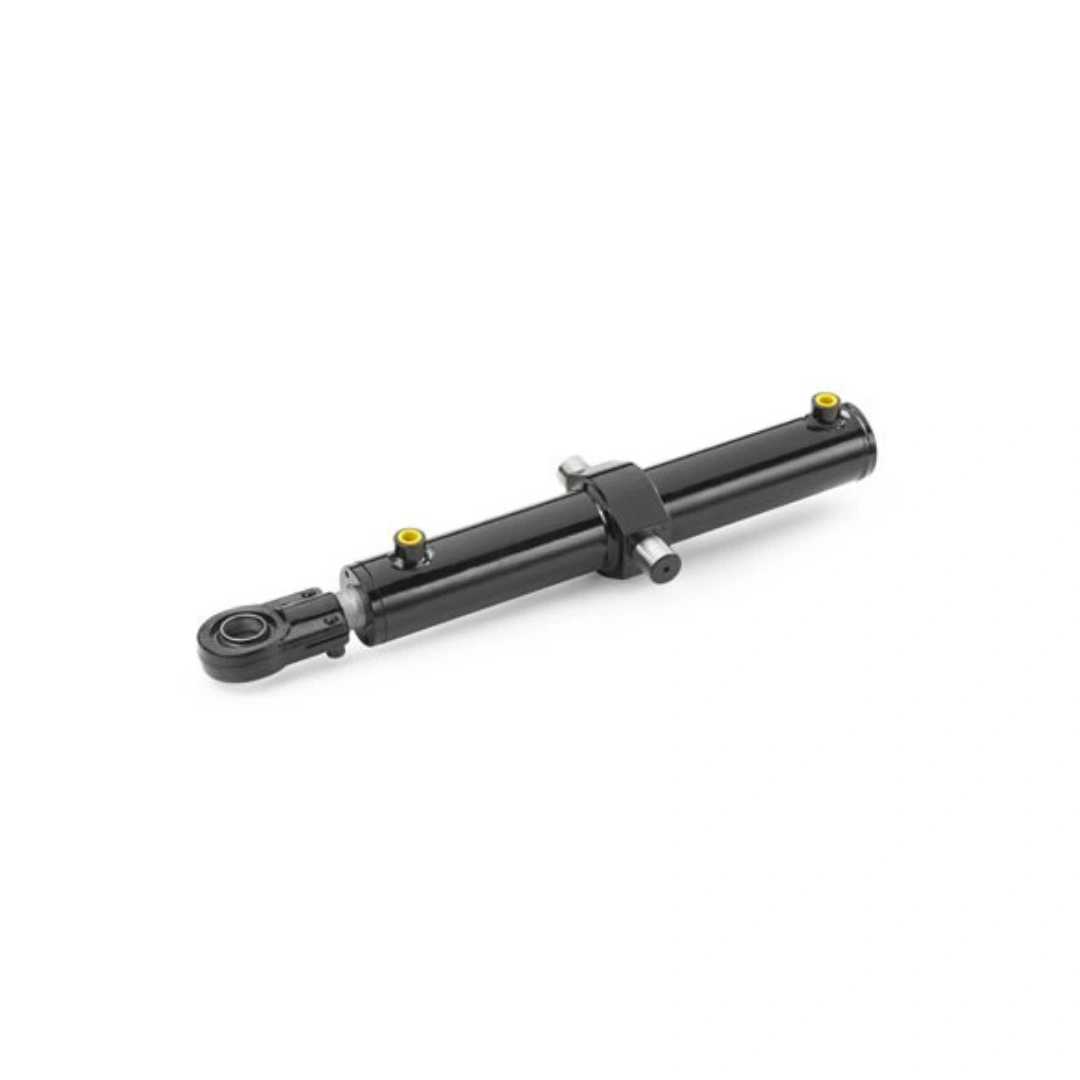
In particularly heavy-duty or high-cycle applications, it may be useful to use hydraulic cylinders designed for severe conditions, such as those available in the grices range, developed to ensure reliability and durability even in demanding operating environments.
Common mistakes in hydraulic cylinder sizing
Many operating problems stem from incomplete initial assessments or choices based solely on cost.
One of the most common mistakes is considering only the static load while ignoring acceleration and friction. Another concerns underestimating mounting conditions, which can generate unexpected lateral loads.
Failure to integrate the cylinder with the rest of the hydraulic system is also a frequent cause of inefficiency. The cylinder must work in harmony with the pump, valves, and piping.
Maintenance and operating life
A correctly sized cylinder tends to require fewer maintenance interventions and offers a significantly longer service life.
Periodic performance monitoring makes it possible to identify any anomalies early, such as internal leakage or drops in efficiency.
Checking the condition of the oil, the presence of contaminants, and the integrity of the seals helps prevent sudden failures and costly machine downtime.
Sizing a hydraulic cylinder is not simply a technical choice, but a real investment in the productivity and safety of the system.
A correctly selected component ensures stable performance, reduced energy consumption, and lower maintenance costs. On the contrary, design-phase mistakes result in chronic inefficiencies and premature replacements.
Thoroughly analyzing loads, operating conditions, and system characteristics makes it possible to create reliable and durable hydraulic systems capable of supporting modern and competitive production processes.