


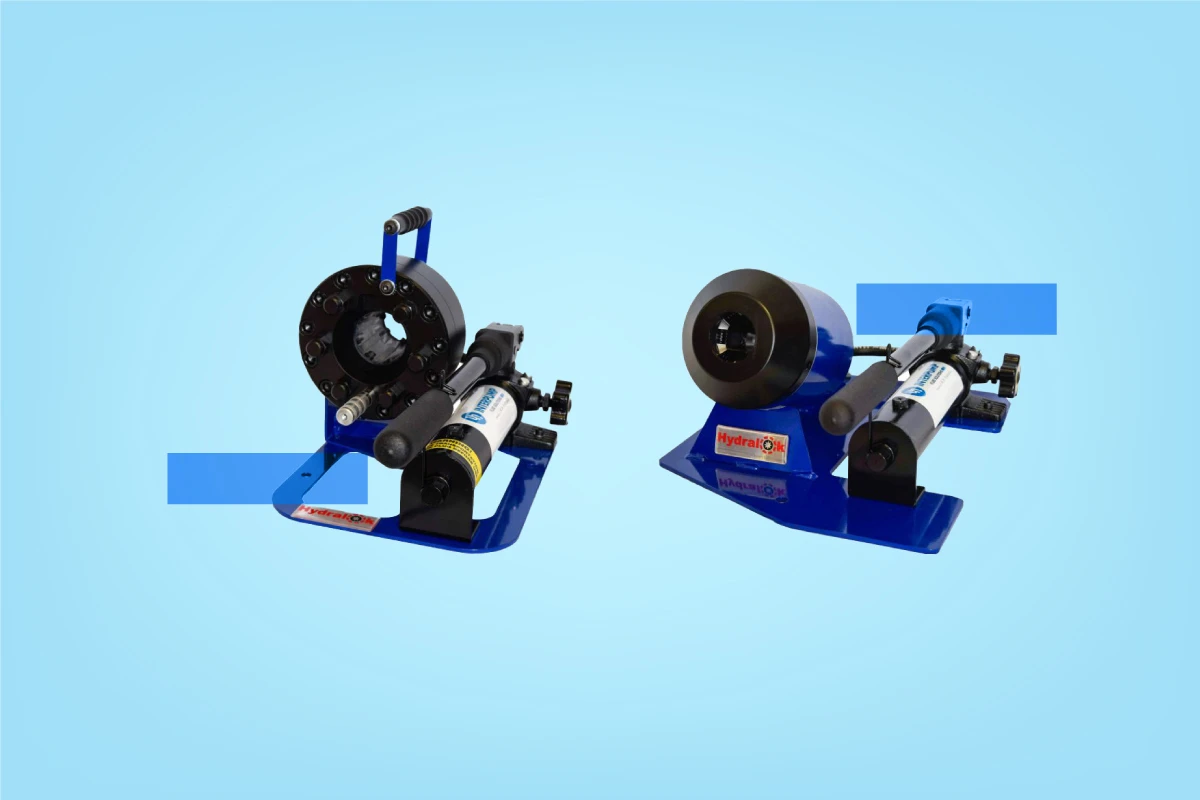
Crimping hydraulic hoses represents a critical phase in the construction and maintenance of hydraulic systems. An incorrectly crimped fitting can cause leaks, pressure drops, fluid contamination and, in the most serious cases, sudden failures or dangerous situations for operators and machinery.
A hydraulic hose crimping machine is therefore not just a simple tool, but a strategic machine to ensure the reliability of the entire circuit. Choosing the correct model and using it according to precise procedures allows safe, durable assemblies that comply with the technical specifications of hose and fitting manufacturers.
The Role of Crimping in Hydraulic Systems
High-pressure flexible hoses form the arteries of the hydraulic system. They transport pressurized fluid between pumps, valves and actuators, withstanding heavy loads, vibrations and temperature variations.
The connection between hose and fitting must ensure a perfect seal even under extreme conditions. Crimping creates a permanent coupling by deforming the metal ferrule of the fitting around the hose.
If the deformation is insufficient, the fitting may slip off or leak. If it is excessive, the inner hose may be damaged, compromising pressure resistance.
Process precision depends directly on the quality of the crimping machine and the correct use of crimping tools.
Types of Hydraulic Hose Crimping Machines
Crimping machines are mainly distinguished by operating method, size and working capacity.
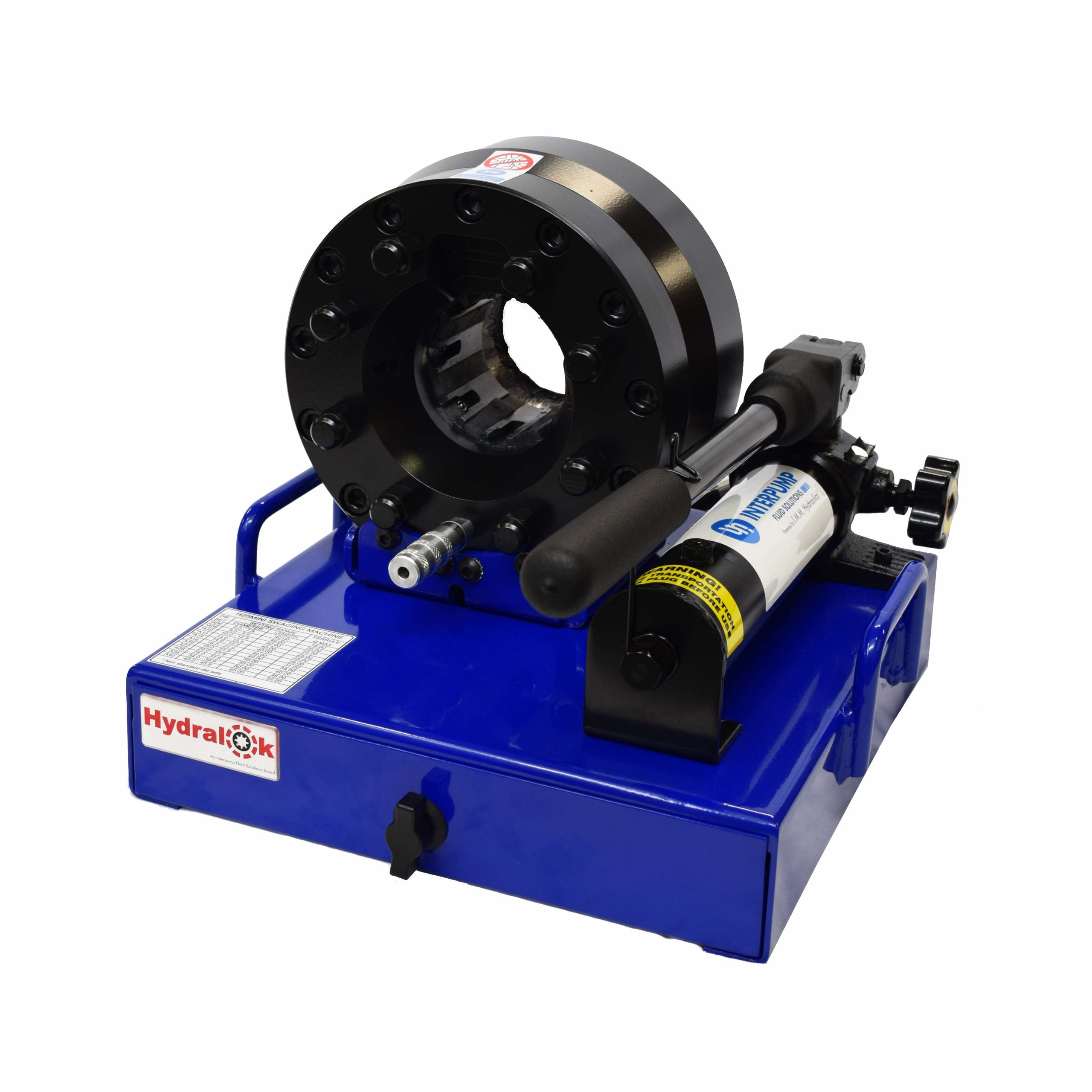
Manual crimping machines are suitable for occasional operations or where electrical power is not available. They offer portability but require more effort and provide limited precision.
Electric bench crimping machines represent the most widespread solution in workshops and maintenance centers. They allow fast, repeatable operations with accurate control of the crimping diameter.
High-capacity industrial crimping machines are designed for intensive production or large-diameter hoses used in heavy machinery, industrial plants and offshore applications.
The choice depends on work volume, hose diameter and the level of precision required.
Crimping Capacity and Application Range
One of the key parameters is the maximum hose diameter the machine can process. This value must be compatible with current and future operational requirements.
In addition to diameter, it is important to evaluate the type of hoses used: braided, multi-layer or ultra-high-pressure hoses require different crimping forces.
An undersized machine will not correctly deform the fitting, while an oversized one may be less precise on small-diameter hoses.
The Role of Crimping Dies
Dies are the components that physically contact the fitting during crimping. Each type of fitting requires a specific die to achieve the correct deformation.
Using incompatible dies is one of the main causes of defective assemblies. Die wear also affects the precision of the final diameter.
Regular inspection of die condition and timely replacement ensures consistent results over time.
Crimping Diameter Accuracy
The final diameter after crimping must fall within the tolerances specified by the fitting manufacturer. This value determines sealing quality and pressure resistance.
A modern crimping machine allows precise setting of the desired diameter and repetition in every cycle. In critical applications, even minimal variations can affect performance.
It is good practice to verify the diameter with calibrated measuring instruments, especially when starting new operations or changing hose types.
Operational Safety During Crimping
Crimping involves the application of high forces. Improper use can cause machine damage or operator injuries.
Before starting the operation, it is essential to ensure that the hose is correctly inserted into the fitting and that the die is evenly closed.
Modern crimping machines include safety systems that prevent operation if the configuration is incorrect. However, operator training remains the most important factor.
Machine Maintenance and Operational Continuity
A well-maintained crimping machine ensures long-term precision and reduces the risk of downtime. Maintenance includes checking the internal hydraulic system, lubricating moving parts and verifying electronic systems.
Machine cleanliness is also essential. Metal residues or dirt can compromise uniform die closure.
A preventive maintenance plan helps maintain consistent performance and extend the service life of the crimping machine.
Production Efficiency and Inventory Management
Having an in-house crimping machine allows hoses to be produced quickly, reducing machine downtime. In many industrial and agricultural contexts, this represents a significant competitive advantage.
The ability to produce hoses directly in the workshop eliminates dependence on external suppliers for urgent interventions and allows more efficient inventory management.
For a complete overview of available solutions, you can consult the range of hydraulic hose crimping machines designed to ensure reliability, precision and safety in crimping operations.
Common Mistakes When Choosing a Crimping Machine
Many companies choose a crimping machine based solely on price or size, without considering the actual type of work required.
A common mistake is underestimating production volume. An inexpensive machine may seem adequate at first but quickly become a bottleneck as demand increases.
Another mistake concerns the lack of availability of dies compatible with all types of fittings used. This limits operational flexibility and may require additional purchases.
The Importance of Operator Training
Even the best crimping machine cannot guarantee correct results without properly trained operators. Knowledge of assembly procedures, tolerances and the characteristics of different hoses is essential.
Proper training reduces the risk of errors, improves work quality and increases overall operational safety.
A Strategic Choice for System Reliability
A hydraulic hose crimping machine represents a key element in the construction and maintenance of hydraulic systems. Careful selection allows safe assemblies, reduced intervention times and improved operational continuity.
Investing in a machine suited to your needs means protecting circuit integrity, increasing efficiency and reducing the risk of sudden failures.
In an industrial context increasingly focused on productivity and safety, the quality of hose crimping is not a minor technical detail, but a decisive factor in overall system performance.