


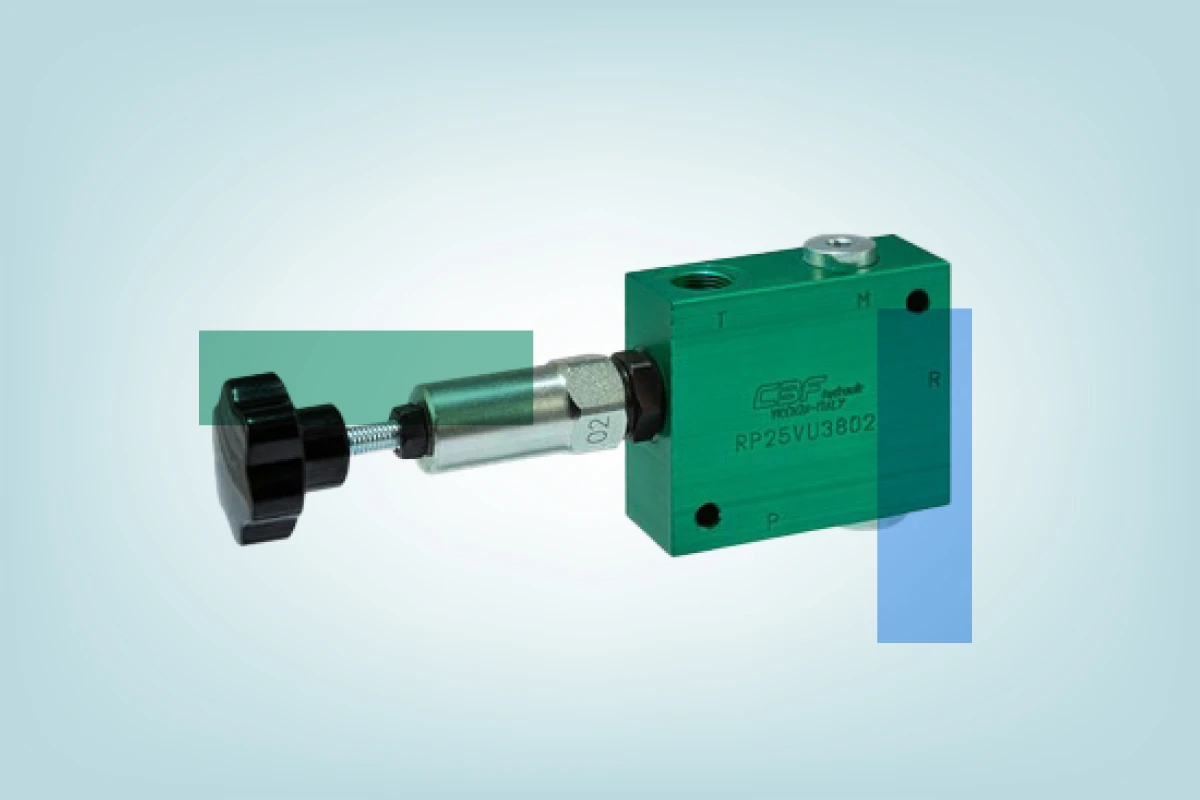
Pressure represents the most critical variable in a hydraulic system. It is the parameter that determines available force, operational safety, and component lifespan. Without precise pressure control, even the most advanced system becomes unstable, inefficient, and prone to failure.
Pressure control valves act as “intelligent regulators” within the circuit. They manage, limit, and distribute pressure across different branches of the system, ensuring that each component operates within its design limits.
Selecting the correct valves is not only a technical matter but also a strategic factor in preventing overloads, reducing energy consumption, and improving overall reliability.
The Role of Pressure in Hydraulic Systems
In a hydraulic circuit, pressure is simply the resistance that the fluid encounters along its path. As the load increases, pressure rises accordingly. This simple principle leads to a fundamental consequence: without proper control, pressure can exceed safety limits.
Visualizing the system as a water network helps clarify the concept. If all valves remain closed while the pump continues pushing fluid, internal pressure increases until pipes and components are compromised.
Pressure control valves intervene precisely in these situations, maintaining balance between generated energy and the actual demand of the system.
Relief Valve: Primary System Protection
The relief valve represents the first level of safety. Its function is to limit the maximum circuit pressure by diverting excess fluid back to the tank.
When pressure exceeds the preset value, the valve automatically opens. This mechanism prevents damage to pumps, pipes, and actuators.
Proper setting is essential. If the value is too low, the system will not achieve the required performance. If it is too high, protection becomes ineffective.
Over time, wear and contamination may alter valve behavior, making periodic inspection necessary.
Pressure Reducing Valves: Local Control and Stability
Pressure reducing valves allow maintaining a lower and constant pressure in a specific section of the circuit. This is particularly useful when different actuators require different pressure levels.
In a complex system, for example, one cylinder may require high force while another component requires more delicate movement. The reducing valve creates a “controlled zone” where pressure remains stable regardless of upstream variations.
This type of control improves motion precision and reduces stress on more sensitive components.
Sequence Valves: Intelligent Operation Management
Sequence valves regulate the activation order of actuators based on pressure. They allow operations to be performed in a precise sequence without the need for complex electronic systems.
The principle is simple: a second actuator activates only when pressure in the first circuit reaches a specific value.
This logic is widely used in presses, automatic machines, and clamping systems, where correct operational sequencing is essential to prevent errors or mechanical damage.
Counterbalance Valves: Safety and Load Control
Counterbalance valves play a crucial role in applications involving suspended loads or controlled descent. They prevent uncontrolled movements caused by load weight.
Without this type of valve, a cylinder could move too quickly or even fall due to gravity.
The valve maintains controlled pressure on the discharge side, ensuring smooth and safe motion. This improves not only safety but also operational precision.
Unloading Valves and Energy Management
Unloading valves allow fluid to be diverted to the tank when pressure is not required in the system. This reduces pump load and limits heat generation.
Without these valves, the pump would continue operating under pressure even when the system is idle, resulting in energy waste and increased oil temperature.
Effective pressure management therefore directly contributes to system energy efficiency.
Interaction Between Pressure, Temperature, and Oil Life
Pressure and temperature are closely related. As pressure increases, more energy is dissipated in the form of heat.
A system operating constantly near pressure limits tends to overheat. The oil loses viscosity, oxidizes more quickly, and reduces its lubricating capability.
Pressure control valves, by regulating peaks and distributing loads, help maintain stable operating conditions and extend the service life of both fluid and components.
Valve Selection: Key Technical Criteria
Selecting pressure control valves requires considering several factors. Maximum operating pressure is the first parameter, but not the only one.
System flow rate, fluid type, required precision, and environmental conditions must also be evaluated. Valve response time can significantly influence performance, especially in dynamic systems.
Correct selection considers the entire system, not just the individual component.
For industrial and mobile applications, you can explore the available solutions within the range of pressure control valves, designed to ensure reliability, precision, and long service life.
Common Pressure Management Errors
Many operational problems arise from incorrect pressure management rather than component defects.
One of the most common mistakes is using a single relief valve to control the entire system. This approach does not allow precise regulation and may generate instability.
Another error involves lack of maintenance. Dirty or worn valves do not respond correctly to pressure changes, causing oscillations and loss of control.
Choosing components that are not suitable for actual operating conditions is also a frequent cause of inefficiency.
Valve Maintenance and Diagnostics
Pressure control valves require periodic checks to ensure consistent performance. Calibration verification, internal cleaning, and seal inspection are essential operations.
System behavior analysis, such as abnormal pressure variations or irregular actuator movements, may indicate valve-related issues.
A predictive maintenance approach allows intervention before failures occur, reducing costs and downtime.
Pressure Control as a Strategic Lever
Proper pressure management means controlling the entire hydraulic system. Valves are not simple accessories but central elements in system design and performance optimization.
A system with stable pressure operates more efficiently, consumes less energy, and requires less maintenance. Conversely, unstable pressure leads to wear, inefficiencies, and hidden costs.
Selecting and managing pressure control valves therefore represents a strategic lever to improve system reliability, safety, and competitiveness.