


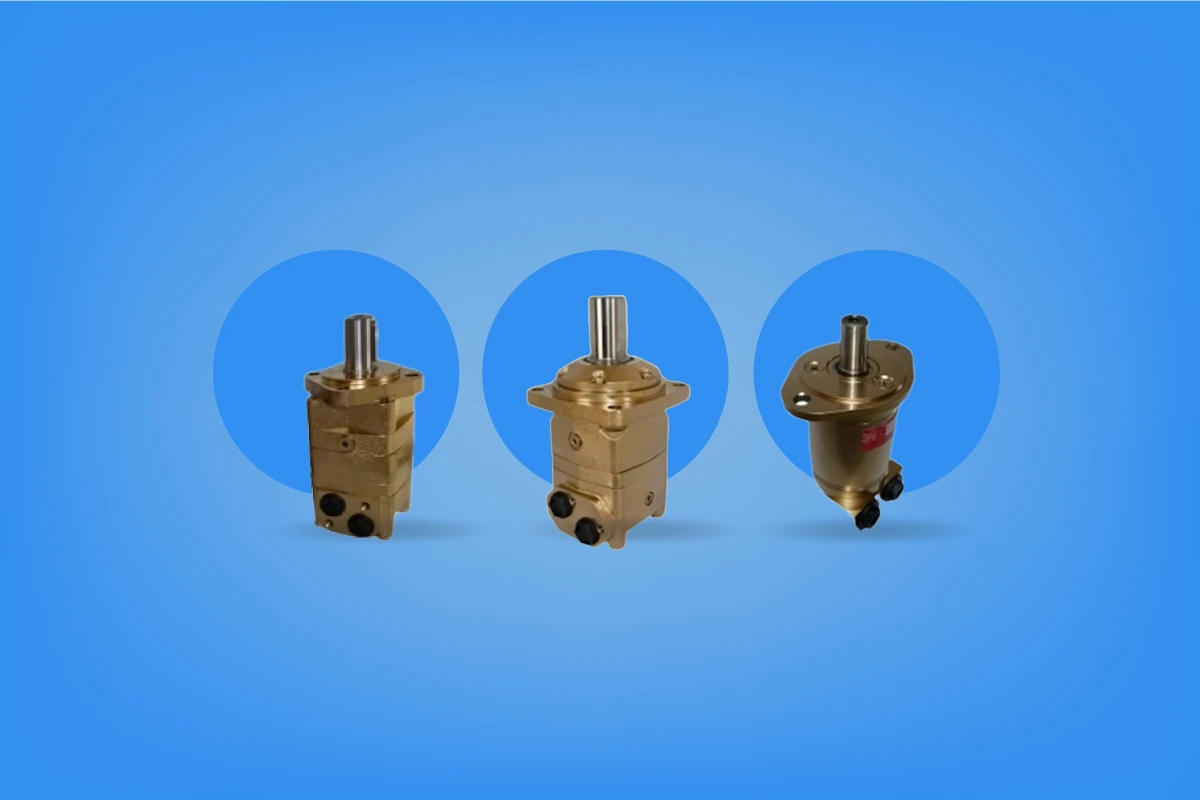
Orbital motors are one of the most widely used solutions in hydraulic systems that require high torque at low rotational speeds. Compact, robust and reliable, these motors are used in numerous mobile and industrial sectors: from agricultural machinery to earthmoving equipment, as well as industrial plants and automation applications.
Their success comes from a key characteristic: the ability to convert hydraulic fluid energy into rotary motion with high efficiency even under demanding operating conditions. Where other motors would require complex mechanical gear reducers, the orbital motor generates torque directly.
Understanding the operating principle, the differences between the various configurations and the selection criteria makes it possible to make the best use of these components and design more efficient and reliable hydraulic systems.
How an orbital motor works
An orbital motor is a low-speed high-torque hydraulic motor (LSHT – Low Speed High Torque). Its operation is based on an internal assembly consisting of two main elements: the stator and the rotor.
Pressurized hydraulic fluid enters the motor and acts on the chambers created between the rotor and the stator. The pressure difference between inlet and outlet generates a force that sets the rotor in motion, converting hydraulic energy into mechanical rotation.
The distinctive feature of the orbital system lies in the rotor’s movement. This component does not simply rotate around its own axis, but performs an eccentric orbital motion relative to the stator. During this movement, new pressure chambers are continuously formed, maintaining constant rotation.
A simple way to imagine the process is to think of a gear wheel rolling inside a larger ring. The contact between the two elements creates a continuous sequence of volumes that expand and compress under the action of the fluid.
This principle ensures smooth rotation and the ability to develop high torque even at low speeds.
Internal structure and main components
The structure of an orbital motor is designed to ensure reliability even under demanding operating conditions. Each component plays a specific role in converting fluid pressure into motion.
The rotor-stator group represents the heart of the system. The tolerances between these two elements must be extremely precise to guarantee effective hydraulic sealing and efficient torque transmission.
Alongside the orbital group we find the hydraulic distributor, which manages the flow of oil toward the various pressure chambers. This component synchronizes the inlet and outlet of the fluid, ensuring smooth and continuous rotation.
Another key element is the output shaft, which transmits the torque generated by the motor to the connected mechanical system. Depending on the application, the shaft can be designed with different configurations to adapt to different coupling types.
The robustness of these components allows orbital motors to operate in demanding environments, with high loads and intensive duty cycles.
Advantages of orbital motors in hydraulic systems
Orbital motors offer several advantages compared to other hydraulic transmission solutions. The first concerns the ability to generate high torque even at very low rotational speeds.
In many mobile and industrial applications this represents a decisive advantage. Without an orbital motor it would be necessary to install complex mechanical gear reducers, resulting in higher costs, larger size and increased maintenance.
Another strength is their compactness. Thanks to their internal architecture, these motors are able to deliver high performance within relatively small dimensions.
Their simple construction also ensures high operational reliability. With a limited number of components subject to wear, orbital motors can operate for long periods with minimal maintenance.
Finally, these motors provide a good ability to withstand load variations and harsh operating conditions, making them ideal for mobile applications and heavy machinery.
Applications of orbital motors
Thanks to their versatility, orbital motors are used in numerous sectors.
In the agricultural sector, they are used to drive augers, conveyor belts, fertilizer spreaders and machine feeding systems. Their ability to operate at low speeds makes them ideal for applications requiring controlled motion and high torque.
In earthmoving, orbital motors are used in equipment such as hydraulic augers, sweepers, milling heads and rotation systems.
These components are also widely used in the manufacturing industry. They can drive rotary tables, handling systems and industrial automation devices.
The combination of robustness, compactness and performance makes them an extremely versatile solution for any system requiring controlled rotation.
How to choose the right orbital motor
Choosing an orbital motor cannot be based solely on size or nominal power. It is necessary to carefully analyze the operating conditions of the system.
The first parameter to consider is the torque required by the application. This value depends on the mechanical load that the motor must move.
A second key element is the required rotational speed. Orbital motors are designed to operate at low speeds, but the available range covers different operational needs.
The flow rate and pressure of the hydraulic circuit must also be compatible with the characteristics of the selected motor. Incorrect sizing can drastically reduce system efficiency.
Finally, it is important to consider the operating environment. Dust, humidity, vibrations or intermittent loads may influence the choice of the most suitable model.
For specific applications and for an overview of the available models, you can consult the range of orbital motors designed to ensure reliability and performance in hydraulic systems.

Most common operational problems and how to prevent them
Like all hydraulic components, orbital motors can also be affected by non-optimal operating conditions.
One of the most common issues concerns hydraulic fluid contamination. Solid particles or impurities present in the oil can damage internal surfaces and compromise the hydraulic sealing between the rotor and stator.
Another critical factor is the oil temperature. When the fluid operates at excessively high temperatures, viscosity decreases and the system loses efficiency.
Excessive pressures or sudden loads can also accelerate wear of the internal components.
A preventive maintenance program that includes proper filtration, temperature monitoring and periodic oil condition checks can significantly extend the service life of the motor.
The role of maintenance in the lifespan of orbital motors
The operational lifespan of an orbital motor largely depends on the quality of hydraulic system maintenance.
Regular monitoring of the hydraulic fluid is one of the most important activities. The oil is not only a means of transmitting energy, but also the element that lubricates and protects the internal surfaces of the motor.
When the fluid is clean and maintains the correct viscosity properties, the motor can operate for long periods without significant degradation.
Monitoring the operating conditions of the circuit – pressure, temperature and vibrations – also helps identify anomalies before they turn into failures.
An approach based on preventive maintenance and proper system management makes it possible to fully exploit the potential of orbital motors and ensure reliable performance over time.
Why orbital motors are a strategic solution
Orbital motors represent a well-established technology in hydraulic systems thanks to their ability to combine high torque, compactness and reliability.
Their architecture allows efficient rotary motion even at low speeds, reducing the need for additional mechanical components.
When properly selected and integrated into a well-designed circuit, these motors ensure consistent performance and long operational life.
For this reason, they continue to be a strategic choice in many industrial and mobile applications where hydraulic transmission must combine power, control and reliability.