


Hydraulics is undergoing a phase of accelerated transformation: digitalization, sustainability, new regulations, and integration with advanced automation are changing the way industrial machines are designed, controlled, and maintained. 2026 is shaping up to be a turning point, a year in which ongoing innovations will be consolidated and new technological opportunities will emerge.
The central thesis is clear: only hydraulic systems that adopt intelligent technologies, advanced materials, and energy efficiency will be able to compete in the new industrial landscape.
Below are the five most relevant trends that will influence the sector.
Trend 1: Intelligent sensors and integrated predictive maintenance
The availability of more precise, smaller, and more robust sensors is revolutionizing the diagnostics of hydraulic systems. Components are no longer considered passive parts, but intelligent nodes capable of monitoring themselves.
How monitoring of hydraulic systems is changing
Next-generation sensors continuously measure critical parameters such as pressure, temperature, flow, and oil quality. On-board algorithms interpret variations and recognize anomalous patterns before they turn into actual failures.
Predictive maintenance replaces scheduled maintenance: interventions are carried out only when necessary and always before system downtime. This makes it possible to extend component service life and drastically reduce unexpected costs.
The evolution of test points
Traditional test points do not disappear, but they become more advanced. They are designed to be compatible with digital instruments and adopt materials that are more resistant to new operating pressures, which are increasingly higher in modern systems.
The result is more accurate, faster diagnostics that are integrated with the machine control system.
Trend 2: Energy efficiency and reduction of pressure losses
Energy costs, regulatory pressure, and ESG policies are pushing industry to rethink consumption logic.
Variable-speed systems and intelligent pumps
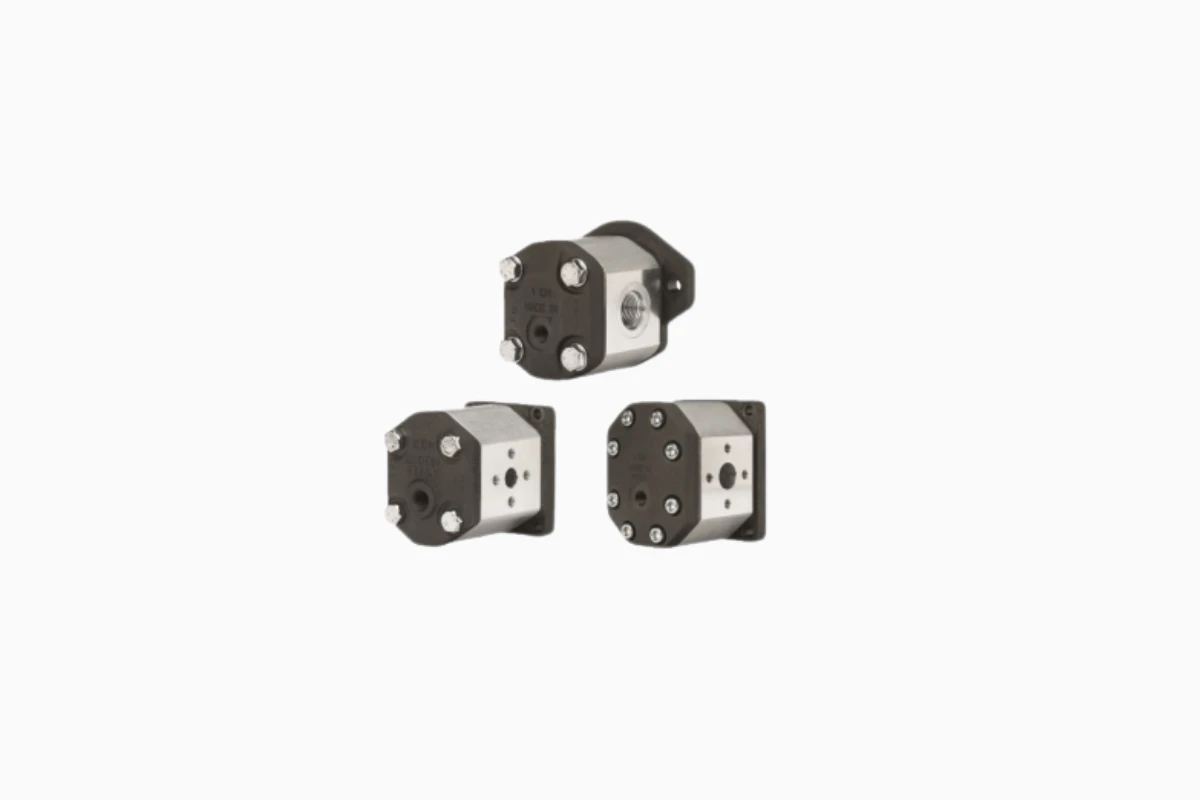
Next-generation variable-displacement pumps, together with speed-controlled drives, are becoming the standard. They regulate flow exactly according to demand, drastically reducing dissipation and improving the overall efficiency of the circuit.
This trend is particularly evident in high duty-cycle sectors, where even small improvements translate into significant energy savings.
Optimization of peripheral components
Filters, heat exchangers, accumulators, and valves are being redesigned to minimize pressure losses and turbulence, with a dual objective: reducing consumption and increasing operational stability.
Trend 3: More advanced and sustainable hydraulic fluids
The focus on sustainability is also reflected in the chemistry of hydraulic fluids.
Eco-compatible and biodegradable formulations
In the agricultural, forestry, and maritime sectors, the adoption of biodegradable oils is growing, reducing environmental impact in the event of leaks. Performance today is comparable—and often superior—to that of traditional mineral oils.
Fluids with greater thermal stability
The trend toward higher pressures requires fluids that are resistant to oxidation and thermal degradation. New formulations ensure more stable viscosity even under extreme conditions, reducing wear and extending the life of pumps, valves, and actuators.
Trend 4: Advanced materials and more robust components
Cylinders, hoses, seals, and fittings must withstand higher pressures and more intense duty cycles.
High-performance steels and innovative treatments
The use of high-strength steels, advanced surface treatments, and more precise machining processes reduces fatigue phenomena and improves reliability in severe applications.
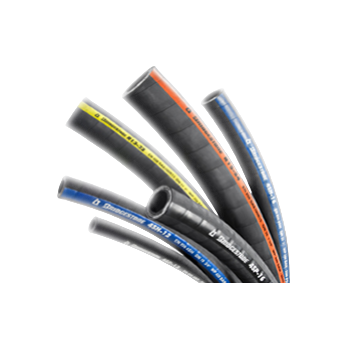
Safer and more durable hoses
The demand for safety is growing especially in industrial sectors with high operational risk. Research focuses on stronger reinforcements, rubber with greater thermal resistance, and more effective anti-abrasion systems.
Trend 5: Full integration with automation and Industry 4.0
The hydraulic system is no longer an isolated module: it is part of a digital ecosystem.
Data communication and standardized protocols
Proportional valves, intelligent sensors, and electronic control units communicate with PLCs, SCADA systems, and cloud platforms. Remote diagnostics become a strategic asset.
Digital Twin and predictive simulation
The most advanced manufacturers design complete systems based on virtual models that replicate circuit behavior under all operating conditions. Simulation anticipates critical issues, optimizes components, and accelerates development timelines.
The five trends described outline a rapidly evolving sector. The combination of digitalization, sustainability, energy efficiency, and advanced materials creates a new generation of hydraulic systems that are more reliable, more intelligent, and higher performing. Companies that are able to adopt these technologies early will be well positioned to compete in the 2026 market and beyond.