


A hydraulic system without measuring instruments is a system operating blindly. Pressure, temperature, oil level, and flow rate are not just simple parameters: they represent the health status of the system. Monitoring them accurately means preventing failures, optimizing performance, and drastically reducing operating costs.
Those who manage hydraulic systems know this well: problems do not arise suddenly. They manifest through weak signals that, if detected in time, prevent machine downtime and extraordinary maintenance interventions.
The strategic role of measuring instruments in hydraulic systems
Every hydraulic component operates within a dynamic balance. Pressure must remain within controlled limits, temperature must dissipate properly, and the oil must maintain consistent characteristics.
Measuring instruments transform these variables into readable information. Without this data, the system becomes unpredictable.
An abnormal increase in pressure may indicate a blockage or a poorly calibrated valve. High temperature signals inefficient dissipation or excessive friction. An incorrect oil level compromises lubrication and promotes air ingress into the circuit.
Interpreting these signals allows intervention before the problem becomes critical.
Real data for operational decisions
The difference between corrective maintenance and predictive maintenance lies entirely in data. Measuring instruments make it possible to shift from a reactive approach to a proactive one.
A continuously monitored system allows maintenance planning, reduces downtime, and optimizes resources.
Pressure: the key parameter to control
Pressure represents the force with which oil transmits energy. Accurate control prevents overloads and ensures consistent performance.
Pressure switches and transducers: continuous control and monitoring
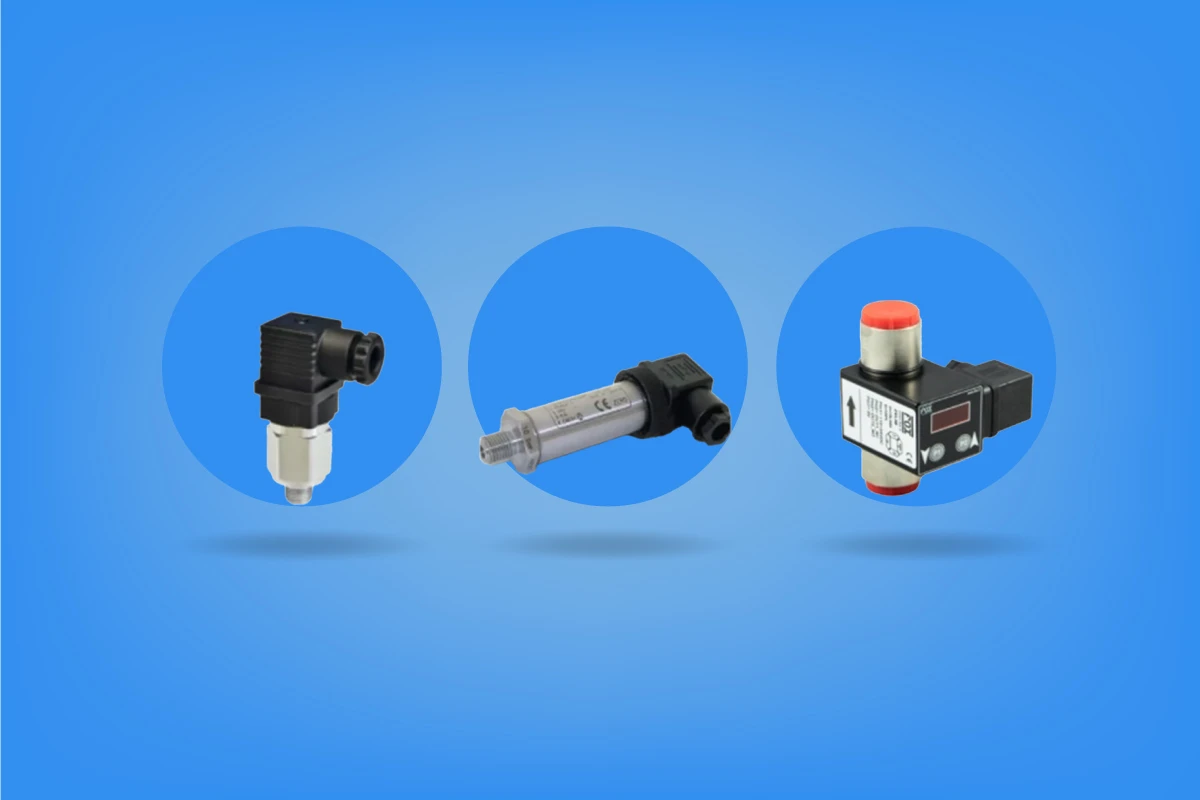
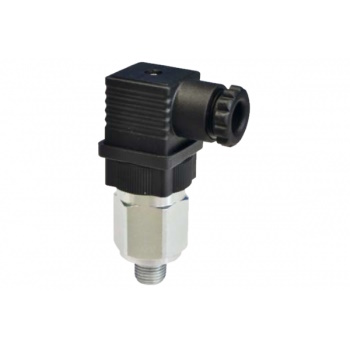
Pressure switches activate or deactivate a circuit when a threshold is reached. They are simple yet essential tools for safety.
Transducers, on the other hand, convert pressure into a continuous signal. This makes it possible to monitor even minimal variations and analyze system behavior over time.
A gradual drop in pressure may indicate internal wear or leaks. A sudden spike may signal a blockage in the circuit.
When discussing components such as flow switches, level indicators, pressure switches, and transducers, you can explore the available solutions in the range, designed to ensure precision and reliability even under complex operating conditions.
Temperature: the silent enemy of efficiency
Temperature directly affects oil viscosity. Oil that is too hot becomes more fluid, reducing its ability to transmit energy. It is like trying to push with water instead of a more “substantial” fluid.
Conversely, oil that is too cold increases resistance to flow, generating friction and higher energy consumption.
Temperature sensors and thermal control
Sensors make it possible to constantly monitor oil temperature. This data is essential for maintaining system balance.
A progressive increase in temperature may indicate:
- insufficient heat dissipation
- high internal friction
- system overload
Addressing these factors helps preserve oil quality and extend component lifespan.
Oil level: an often underestimated parameter
Oil level directly affects system stability. A level that is too low promotes air ingress, causing cavitation and loss of efficiency.
A level that is too high can create issues such as foaming and overheating.
Level indicators and sensors
Visual indicators allow immediate checks, while sensors provide a continuous signal that can be integrated into monitoring systems.
Accurate level control prevents sudden failures and ensures consistent lubrication.
Flow rate and flow: controlling operating speed
Flow rate determines the movement speed of actuators. Incorrect flow compromises system precision and stability.
Flow switches detect the presence or absence of flow, signaling interruptions or anomalies.
A sudden interruption in flow may indicate:
- blockages
- pump failures
- leaks in the circuit
Monitoring this parameter makes it possible to quickly identify the cause of the problem.
Integration with digital systems and Industry 4.0
Measuring instruments are no longer limited to providing local data. Today they integrate with digital systems that enable advanced analysis and remote monitoring.
This approach makes it possible to collect historical data, identify patterns, and predict failures before they occur.
A connected system transforms the plant into a source of strategic information.
From data to predictive maintenance
Analyzing data over time makes it possible to identify abnormal trends. A slow but steady variation in pressure or temperature is a warning signal.
Intervening at this stage means avoiding costly failures and improving overall reliability.
Common mistakes in choosing measuring instruments
Many problems arise from incorrect device selection. Choosing an instrument based only on price or without considering operating conditions leads to ineffective results.
A sensor unsuitable for the environment may provide inaccurate data or fail prematurely.
Compatibility and operating conditions
Each application requires specific instruments. It is necessary to evaluate:
- pressure range
- operating temperature
- fluid type
- environmental conditions
Proper sizing ensures accuracy and durability.
The value of data-driven maintenance
Integrating measuring instruments into a maintenance plan means transforming system management.
Interventions are no longer carried out only when something breaks, but when data indicates an anomaly.
This approach reduces costs, improves safety, and increases productivity.
An efficient hydraulic system is not based solely on component quality, but on the ability to monitor its behavior.
Measuring instruments transform invisible data into concrete information. They make it possible to prevent failures, improve performance, and ensure operational continuity.
Investing in control means reducing uncertainty and turning maintenance into a strategic lever. In an industrial context increasingly focused on efficiency, this choice represents a real competitive advantage.