


Hydraulics in the agricultural sector is not just a support technology, but the system that makes every useful movement possible: lifting, pushing, tilting, distributing. In an operating environment characterized by dust, humidity, variable loads, and intensive use, every component must ensure durability, precision, and continuity.
An incorrect technical choice does not only result in a loss of efficiency, but also in machine downtime, unexpected costs, and reduced productivity. Conversely, a well-designed hydraulic system transforms an agricultural machine into a reliable tool capable of operating for long periods without compromise.
The Role of Hydraulics in Modern Agricultural Machinery
Tractors, combine harvesters, sprayers, and towed equipment use hydraulic systems to manage increasingly complex functions. The evolution of precision agriculture has increased the level of control required, demanding more responsive and integrated systems.
Pressurized oil acts as an energy carrier. It is not unlike electricity in a circuit: it transports power where it is needed, but with a superior capacity to handle heavy loads and controlled movements.
The real challenge is not generating force, but doing so consistently over time without degrading performance.
Critical Operating Conditions: Dust, Variable Loads, and Intermittent Cycles
Agricultural machines operate in environments where contamination and load variations are the norm. The soil lifts abrasive particles, temperatures change rapidly, and mechanical stresses are not constant.
A system designed without considering these variables quickly loses efficiency. Internal tolerances increase, leaks grow, and control becomes less precise.
For this reason, every component must be selected with a systemic approach.
Key Components of Agricultural Hydraulics
A hydraulic system functions like an organism: every part contributes to the final result. Neglecting even a single element means compromising the entire system.
Pumps and Motors: Energy Generation and Transformation
The pump generates flow, while the motor converts it into movement. In agricultural applications, these components must handle sudden load variations without losing stability.
An undersized pump causes performance drops. An oversized one leads to energy waste and overheating. The same applies to motors: they must provide adequate torque without constantly operating at their limits.
Hydraulic Cylinders: Force and Controlled Movement
Cylinders convert pressure into linear motion. They lift tools, adjust inclinations, and manage opening and closing operations.
Their reliability depends on three factors: seal quality, surface finishing, and contamination control. Even minimal infiltration of abrasive particles can quickly compromise service life.
Valves and Control Units: System Regulation
Valves regulate pressure and flow. Control units manage oil direction. Together, they determine movement precision.
In agriculture, where operations require speed as well as fine control, these components must ensure immediate response and stability.
A poorly calibrated system generates abrupt or imprecise movements, with direct consequences on work quality.
System Reliability: The Role of Filtration and Connections
A hydraulic system rarely fails due to a single major breakdown. It fails because of a series of small inefficiencies that, combined, lead to a gradual decline in performance.
Oil Contamination: The Invisible Enemy
Contamination is the primary cause of wear in agricultural hydraulic systems. Dust, water, and metal particles enter the circuit and act as abrasives.
It is like operating a gear with sand inside it: the system keeps working, but every cycle deteriorates it.
Efficient filters and regular maintenance drastically reduce this risk.
Fittings and Hoses: Critical Points of the System
Connections represent the most vulnerable areas. Leaks, infiltration, and micro-movements can compromise the entire circuit.
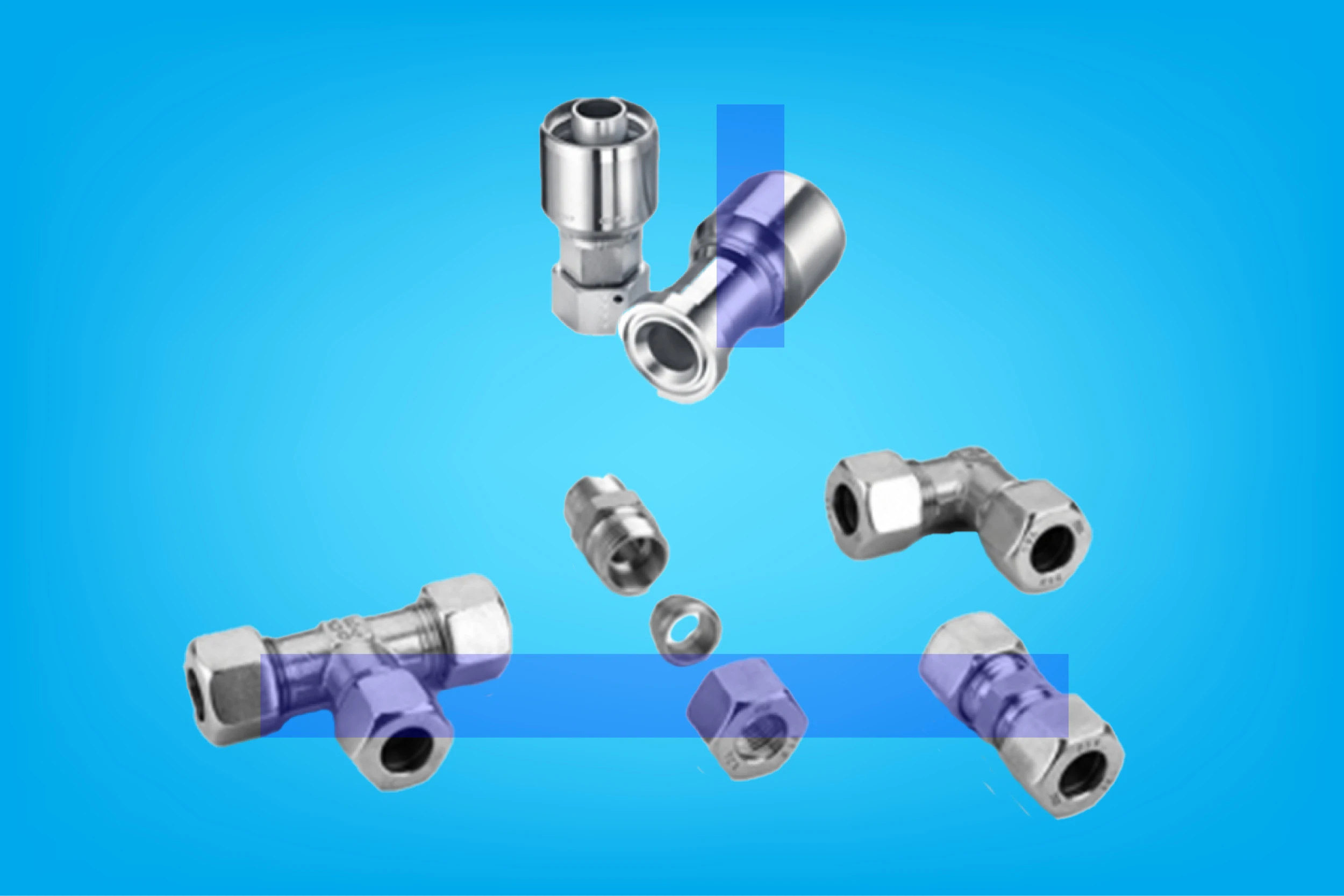
In this context, component quality makes the difference. The use of reliable solutions such as hydraulic fittings ensures sealing, safety, and resistance to the stresses typical of agricultural applications.
A quality fitting does not simply connect two elements: it protects the system from leaks and contamination.
Temperature and Oil Viscosity Management
Oil is not just a transmission fluid. It is also a lubricant and a cooling element.
When temperature increases, viscosity decreases. The oil becomes thinner, flows more easily, but loses its internal sealing capacity. Leakage increases and efficiency declines.
Conversely, oil that is too viscous at low temperatures resists movement, increasing friction.
The Role of Heat Exchangers
Heat exchangers keep oil within an optimal range. In agriculture, where machines operate under load for hours, this control becomes essential.
Without proper temperature management, even the best system loses performance over time.
Predictive Maintenance and Operational Continuity
Intervening only when a failure occurs is no longer sustainable. The cost of machine downtime in agriculture, especially during critical periods, far exceeds the cost of prevention.
Predictive maintenance is based on continuous monitoring of key parameters: pressure, temperature, and oil quality.
Signals Not to Ignore
An increase in temperature, a pressure variation, or abnormal noise represents early warning signs of a problem.
Ignoring them means allowing the system to deteriorate until failure occurs.
Early intervention allows operations to be planned, costs to be reduced, and productivity to be maintained.
Performance Optimization in Agricultural Applications
An efficient hydraulic system depends not only on components, but on how they are integrated.
Proper sizing, careful material selection, and attentive oil management make it possible to achieve superior performance.
Balance Between Power and Control
The goal is not to maximize power, but to make it usable. A system that is too powerful but poorly controlled becomes inefficient.
Conversely, a balanced system ensures precise movements, reduces energy waste, and improves work quality.
The Value of an Integrated Technical Approach
In the agricultural sector, hydraulics is not a set of components, but a complex system that must operate in demanding conditions and over long periods.
Every technical choice affects the final result. From fitting quality to temperature management, every detail contributes to overall performance.
Relying on a technical partner means not only selecting the right components, but building a coherent, efficient, and long-lasting system.
Hydraulics for the agricultural sector requires expertise, attention, and a systemic vision. There are no universal solutions, only technical choices that must adapt to real operating conditions.
A properly designed system ensures operational continuity, reduces costs, and improves productivity.
In a sector where every machine stoppage has a direct impact on results, efficiency is not an option. It is a necessity.