


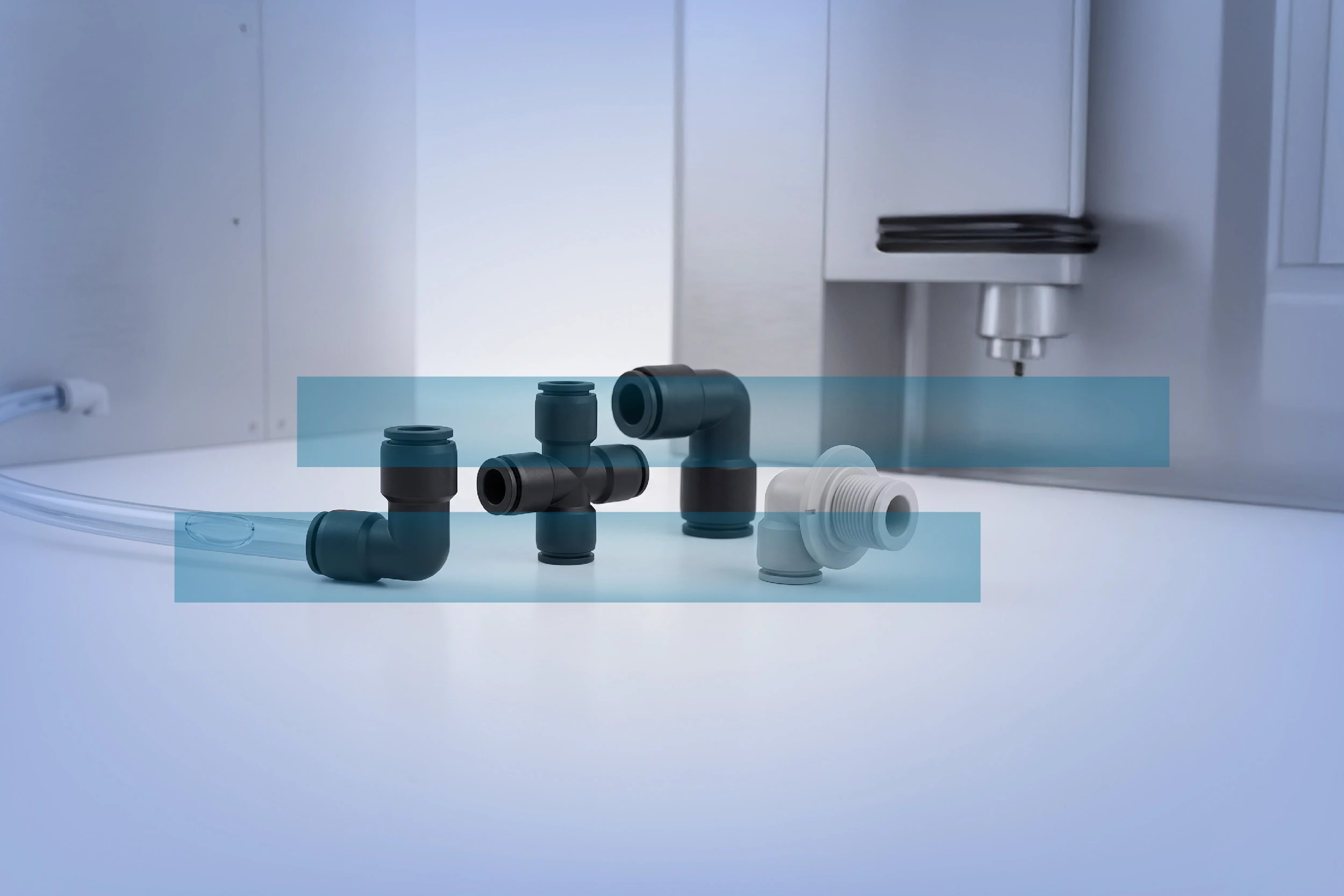
In the industrial sector, pneumatics ensure speed, precision, and operational continuity in thousands of production applications. From automated machinery to assembly lines, every pneumatic system depends on the quality of the components that manage the flow of compressed air. Among these, pneumatic fittings play a decisive role.
A pneumatic fitting does more than simply connect two elements of the circuit. It must keep pressure stable, prevent leaks, simplify maintenance, and withstand vibrations, mechanical stress, and contamination over time. An incorrectly chosen component can compromise the entire system, causing inefficiencies, production stoppages, and high maintenance costs.
For this reason, companies operating in the industrial sector choose reliable and high-performance solutions such as Fluidfit fittings, designed to ensure connection safety, quick installation, and maximum pneumatic system integrity.
What Pneumatic Fittings Are Used For
Pneumatic fittings connect hoses, valves, cylinders, and other components found in a compressed air circuit. Their function is to create stable and secure connections that allow the correct passage of pneumatic fluid without leaks.
Every micro-leak of compressed air can generate an increase in energy consumption. This means greater work for the compressor, higher operating costs, and reduced production efficiency. A quality fitting reduces these risks and improves the stability of the entire system.
Pneumatic fittings are used in numerous sectors, with the automotive sector being the main one. Their reliability directly affects production continuity.
How a Pneumatic Fitting Works
The operating principle is simple, but highly technical. The fitting creates an airtight connection point between the pneumatic hose and the system component.
Modern systems often use push-in quick fittings, designed to speed up assembly and reduce maintenance times. The hose is inserted directly into the fitting, where an internal locking system keeps it stable even under high pressure and continuous vibrations.
This mechanism works similarly to an automatic safety lock: the hose enters quickly but remains perfectly secured, preventing accidental disconnection or air leaks.
Types of Pneumatic Fittings
Every pneumatic system has specific requirements. For this reason, different types of fittings exist, designed to adapt to different configurations and applications.
Quick Pneumatic Fittings
Quick fittings are among the most widely used solutions in industrial automation. They allow fast connections without the use of complex tools.
This feature speeds up assembly and maintenance operations, reducing machine downtime.
Threaded Pneumatic Fittings
Threaded fittings guarantee particularly resistant and stable connections. They are used in applications where sealing must remain constant even under severe operating conditions. They can be made with different types of threads, according to the standards required by the system.
Swivel Pneumatic Fittings
These components allow greater installation flexibility. The ability to orient the fitting facilitates hose routing even in tight spaces or complex configurations.
Elbow, T, and Y Fittings
The geometry of the fitting affects the distribution of pneumatic flow. Elbow fittings allow changes in direction, while T or Y configurations allow compressed air to be divided toward multiple operating lines.
The Most Common Materials Used in Pneumatic Fittings
Material selection determines the fitting’s durability, resistance, and compatibility with the operating environment.
- Nickel-plated brass. Nickel-plated brass offers an excellent balance between mechanical resistance and corrosion protection. It is frequently used in industrial contexts thanks to its long-term reliability.
- Technopolymers. Fittings made of technopolymer ensure lightness, ease of installation, and good chemical resistance. They are particularly suitable for systems that require fast assembly and reduced overall system weight.
- Stainless steel. Stainless steel is chosen in aggressive environments or where high hygiene standards are required, such as the food, pharmaceutical, and chemical industries.
Compressed Air Leaks: The Hidden Problem in Pneumatic Systems
Many companies underestimate the impact of compressed air leaks. In reality, even a small leak can cause a significant increase in energy consumption.
The most frequent causes include:
- worn fittings;
- incorrect installations;
- continuous vibrations;
- unsuitable materials;
- unstable connections.
A quality pneumatic fitting drastically reduces these problems.
From an operational point of view, an air leak behaves like an invisible micro-fault inside the system: the compressor continues to work more than necessary to compensate for the lost pressure, increasing consumption, wear, and energy costs.
How to Choose the Right Pneumatic Fittings
The choice of pneumatic fitting must take several technical factors into account.
- Hose diameter. The fitting must be compatible with the external diameter of the pneumatic hose. Incorrect coupling compromises system sealing.
- Operating pressure. Each fitting has specific operating pressure limits. Using undersized components increases the risk of failures and leaks.
- Working temperature. Some industrial environments involve high temperatures or significant thermal fluctuations. The fitting material must maintain stable performance even under these conditions.
- Chemical compatibility. In the presence of oils, chemicals, or aggressive substances, it is essential to choose materials resistant to corrosion and deterioration.
- Ease of maintenance. Modern fittings must simplify replacement and maintenance operations. Quick connections allow faster interventions and shorter machine downtime.
Fluidfit Fittings: Reliability and Ease of Installation
In the pneumatic sector, Fluidfit fittings are a particularly appreciated solution for reliability, practicality, and connection safety.
These fittings are designed to ensure simple and quick installation, reducing the margin of error during assembly. The internal structure ensures stable locking of the pneumatic hose and helps maintain system integrity even under intensive operating conditions.
The use of reliable components becomes essential especially in automated systems, where operational continuity and precision directly affect company productivity.
The Fluidfit fittings distributed by LubeTeam Hydraulic meet the needs of companies looking for efficient, safe, and long-lasting pneumatic components.
Why Pneumatic Fitting Quality Affects Production Efficiency
Every component contributes to the stability of the production process.
An inexpensive but poorly performing fitting can generate hidden costs far greater than the initial savings. Air leaks, frequent replacements, and machine stoppages quickly affect system profitability.
For this reason, efficiency-oriented companies choose pneumatic components designed to offer consistent performance over time.
The Importance of Pneumatics in Modern Industry
Pneumatics continues to represent a central technology in modern industrial processes. Its widespread use depends on its ability to provide fast, clean, reliable, and easily automated systems.
Within these systems, components such as quick couplings, flexible hoses, and pneumatic fittings determine the overall efficiency level of the system.
LubeTeam Hydraulic provides a range of pneumatic solutions designed to meet the operational needs of modern industry, with particular attention to reliability, safety, and production continuity.
Choosing quality pneumatic fittings means protecting system efficiency, reducing energy waste, and improving the stability of production processes in the long term.