


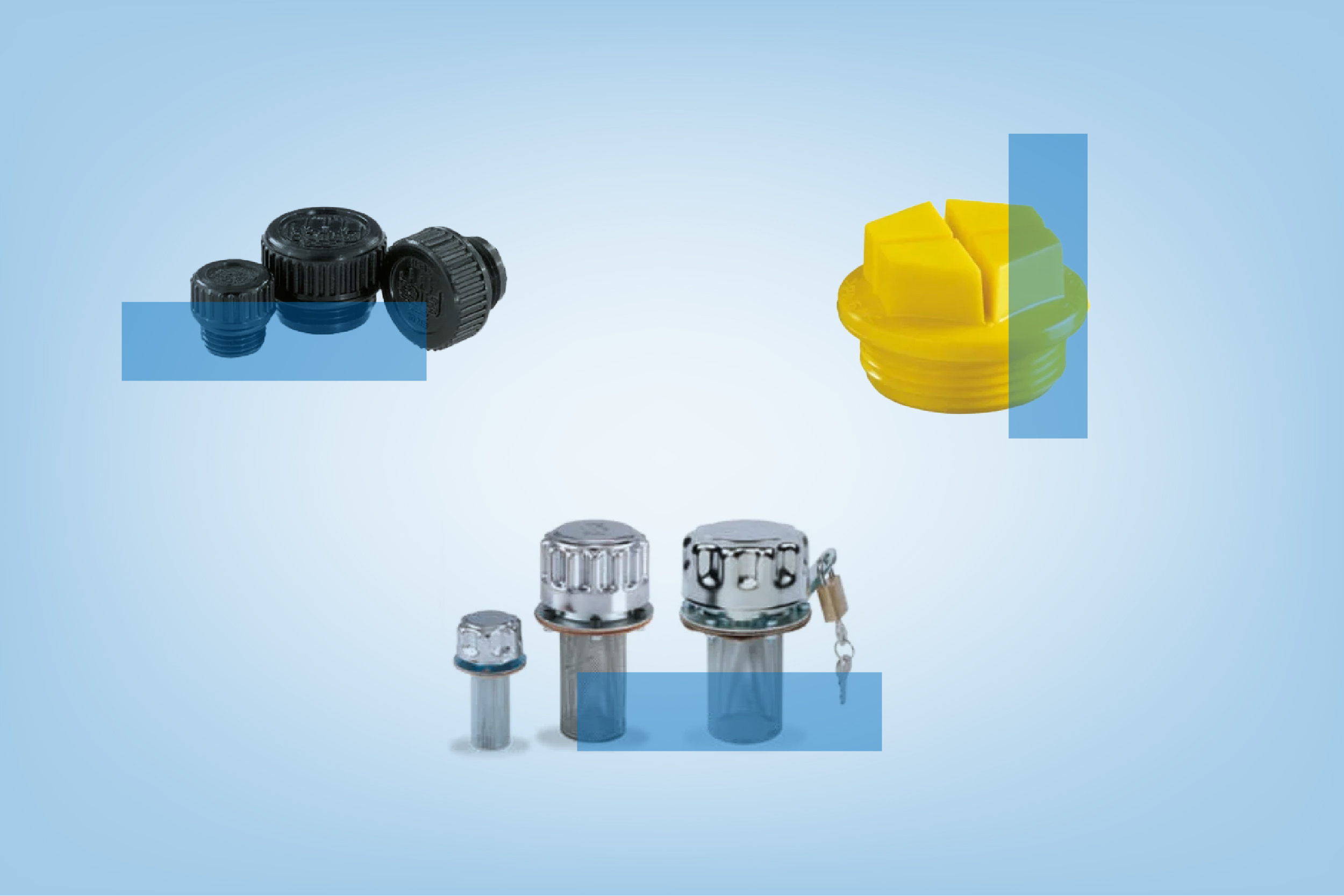
Hydraulic power units operate under complex working conditions, often exposed to vibrations, pressure fluctuations, contamination, and continuous operating cycles. In this context, accessories are not simply complementary components, but essential elements for ensuring reliability, operational continuity, and protection of the hydraulic system.
Oil level indicators, sealing caps, metal breathers, and plastic protections play a decisive role in hydraulic fluid management, contamination prevention, and maintaining proper operating conditions. Even the smallest component can affect the overall performance of the power unit, influencing energy consumption, safety, and maintenance costs.
Choosing the right hydraulic power unit accessories therefore requires technical attention, system compatibility, and materials suited to operating conditions.
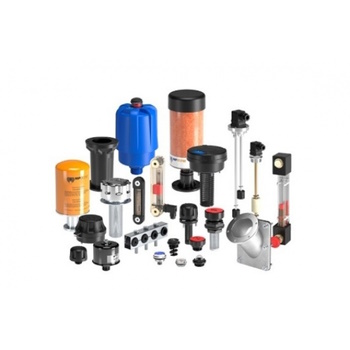
Why Hydraulic Power Unit Accessories Are So Important
In a hydraulic system, the fluid represents the primary energy transfer medium. Any alteration in its condition compromises the operation of the entire system. Accessories intervene precisely on this aspect: they protect the circuit, facilitate operational control, and reduce the risk of malfunctions.
A defective cap can allow dust or moisture to enter the tank. An inadequate breather can generate internal overpressure or vacuum conditions. A damaged level indicator can prevent proper oil monitoring, causing cavitation, overheating, or premature pump wear.
In industrial applications, where machine downtime generates high costs, these details make the difference between an efficient system and one subject to recurring failures.
Oil Level Indicators: Constant Monitoring of Hydraulic Fluid
Oil level indicators allow quick verification of the amount of fluid inside the power unit tank. Their task may seem simple, but their operational impact is enormous.
An insufficient oil level can cause air intake into the circuit, pressure loss, and temperature increase. Conversely, overfilling can generate foam, turbulence, and changes in fluid viscosity.
How Oil Level Indicators Work
Most indicators use a transparent window or a graduated visual system that allows operators to immediately check the fluid level.
In more advanced industrial environments, some models also integrate electrical sensors or thermometers to simultaneously monitor oil level and temperature.
The speed of inspection represents one of the main advantages. A maintenance technician can check the status of the power unit in just a few seconds without interrupting the production cycle.
Materials and Operational Resistance
High-quality indicators use materials resistant to chemicals and thermal variations. High-strength transparent technopolymers ensure constant visibility even in harsh environments.
In systems exposed to strong vibrations or high pressure, gasket quality becomes essential to prevent leaks and external contamination.
Common Mistakes in Indicator Management
One of the most common mistakes is underestimating the opacity of the transparent window. Over time, residues and oxidation can reduce indicator readability, making actual level monitoring difficult.
Incorrect thread or size selection can also compromise the mechanical sealing of the component.
Plastic Protections: Strategic Defense for Sensitive Components
Plastic protections are often considered secondary accessories, but in reality they play an essential role in protecting hydraulic power units.
Sensors, indicators, and connection points are particularly vulnerable to accidental impacts, dust, and contaminants commonly found in industrial environments.
Why Protect Hydraulic Components
In mechanical workshops, manufacturing plants, or highly active industrial environments, impacts and vibrations are everyday occurrences.
A simple breakage of the level indicator can cause:
- oil leakage;
- machine downtime;
- circuit contamination;
- pressure loss;
- extraordinary maintenance costs.
Plastic protections absorb impacts and preserve the integrity of the most delicate components.
Features of Industrial Protections
The best protections use high-resistance technical polymers capable of maintaining dimensional stability even when exposed to oils, grease, and high temperatures.
The lightweight nature of plastic also represents an important operational advantage: the component protects without weighing down the power unit structure.
Contamination and Operational Safety
Hydraulic fluid contamination is one of the leading causes of failure in hydraulic systems. Metal particles, dirt, and moisture accelerate pump wear and compromise valve operation.
Protections help reduce this risk by creating a physical barrier against external agents.
Sealing Caps: Circuit Sealing and Protection
Sealing caps ensure the tight closure of power unit access points when certain connections or openings are not in use.
Their function is not limited to mechanical closure, but above all to protecting the hydraulic circuit from contamination.
The Importance of Sealing in Hydraulic Systems
Hydraulic oil must maintain precise viscosity and purity characteristics. Even small infiltrations can alter system behavior.
An inefficient cap can cause:
- entry of contaminating particles;
- fluid oxidation;
- emulsion formation;
- pressure loss;
- premature component wear.
For this reason, caps must guarantee reliable and long-lasting sealing.
Materials Used for Sealing Caps
Caps can be made of:
- polyamide;
- steel;
- brass;
- aluminum.
The choice depends on the operating conditions of the power unit. In more aggressive industrial environments, metallic materials ensure greater mechanical resistance and durability.
In standard systems, polyamide offers an excellent balance between lightness, chemical resistance, and affordability.
Compatibility and Threading
Thread compatibility is a critical aspect. Incorrect coupling compromises sealing and encourages micro-leaks that are difficult to detect.
For this reason, it is essential to verify:
- thread diameter;
- thread pitch;
- operating pressure;
- chemical compatibility with the fluid.
Filler Breather Caps: Balance Between Pressure and Ventilation
Filler breather caps perform a dual function: they allow oil refilling and regulate air exchange inside the tank.
During power unit operation, the fluid level continuously changes. Without proper venting, the tank could generate internal overpressure or vacuum conditions.
Why Venting Is Essential
When the pump moves the fluid, the internal volume of the tank constantly changes. The system must therefore compensate for these variations through adequate air exchange.
An inefficient breather can cause:
- tank deformation;
- uncontrolled entry of contaminants;
- circuit instability;
- stress on seals.
Proper pressure balancing protects the entire system.
Polyamide Caps: Operational Advantages
Polyamide caps are particularly appreciated for their chemical resistance and lightweight properties.
These components withstand well:
- mineral oils;
- vibrations;
- humidity;
- moderate temperature fluctuations.
Furthermore, polyamide reduces the risk of corrosion and ensures long service life even in demanding industrial environments.
Metal Caps and Breathers: Maximum Robustness for Heavy-Duty Applications
When operating conditions become particularly severe, metal caps and breathers represent the most reliable solution.
Heavy industrial applications require components capable of withstanding:
- high temperatures;
- corrosive agents;
- strong vibrations;
- high pressures;
- continuous mechanical stress.
Materials Used in Metal Caps
The main materials used are:
- Aluminum
Lightweight and corrosion-resistant, ideal for standard industrial applications where a good balance between weight and strength is required.
- Brass
Appreciated for its high chemical resistance and long service life. Mainly used in humid environments or those exposed to oxidation.
- Steel
Provides maximum mechanical resistance and extreme durability. Ideal for systems exposed to heavy stress.
- Durability and Reduced Maintenance
Metal components reduce maintenance frequency thanks to their high robustness. In many industrial plants, frequently replacing worn components generates significant indirect costs: machine downtime, intervention time, and productivity loss.
Investing in high-quality metal accessories therefore increases the operational reliability of the entire power unit.
How to Choose Hydraulic Power Unit Accessories
Choosing the correct accessories requires precise technical evaluation. There is no universal solution suitable for every system.
Each power unit operates under specific conditions that influence component materials, dimensions, and characteristics.
Evaluating the Operating Environment
Dust, humidity, high temperatures, and corrosive agents directly affect accessory lifespan.
In harsh environments, it is advisable to prioritize:
- metal components;
- high-resistance seals;
- anti-corrosion materials;
- reinforced protections.
Considering the Type of Hydraulic Fluid
Some fluids may be aggressive toward certain plastic materials or seals.
Chemical compatibility is therefore a fundamental factor in preventing premature deterioration.
Reducing Plant Downtime Costs
Many companies focus exclusively on the initial cost of the component. In reality, the true parameter to evaluate is the overall operating cost.
An inexpensive but unreliable accessory can cause:
- production losses;
- extraordinary maintenance;
- frequent replacements;
- damage to other components.
Build quality directly affects production continuity.
Hydraulic Accessories and Preventive Maintenance
Effective maintenance is not limited to replacing pumps or filters. Accessories also require periodic inspections to ensure consistent performance.
Regularly checking the condition of:
- level indicators;
- caps;
- breathers;
- protections;
- seals;
allows anomalies to be identified before they become critical failures.
Preventive maintenance reduces downtime, extends system lifespan, and improves operational safety.
Reliability and Performance of Hydraulic Power Unit Accessories Start with the Details
The performance of a hydraulic power unit depends on the balance between all its components. Accessories play a strategic role in fluid protection, operational control, and overall system stability.
Oil level indicators, sealing caps, metal breathers, and plastic protections help maintain high standards of efficiency, reliability, and safety.
Choosing components designed for industrial applications means reducing contamination risks, optimizing maintenance, and increasing long-term system durability.