


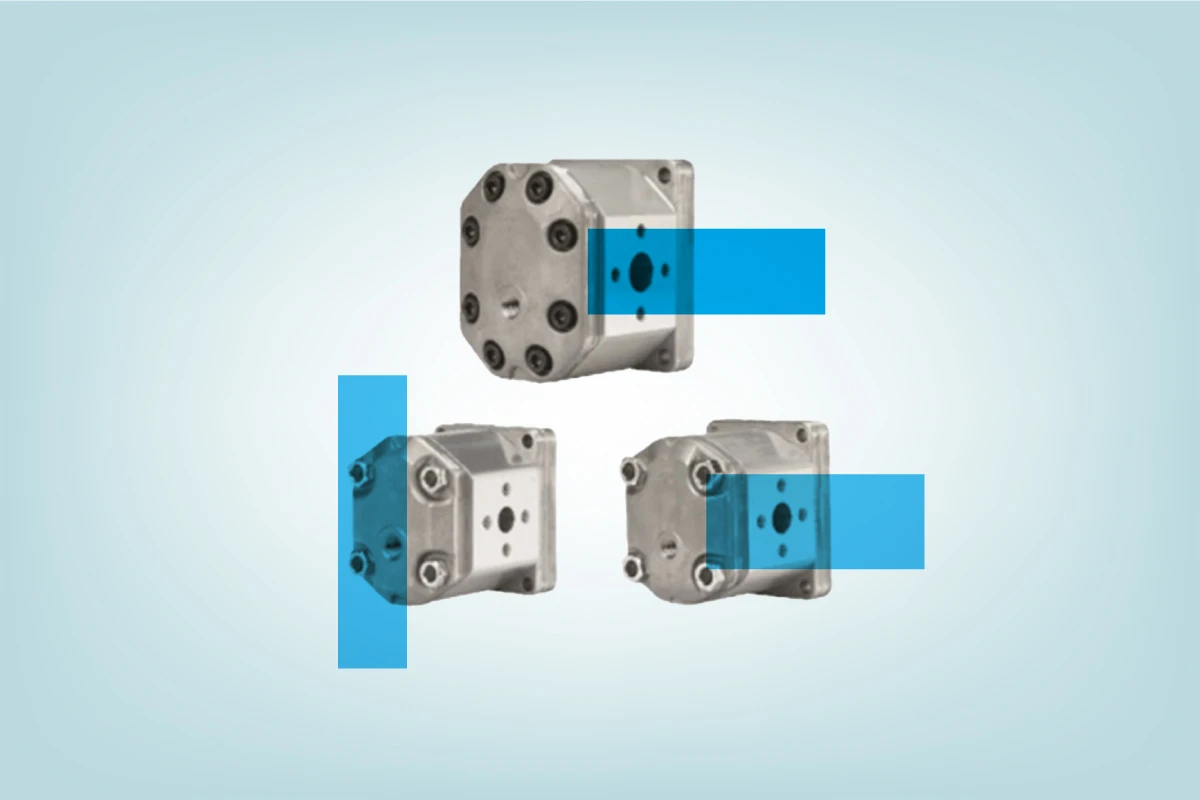
An efficient hydraulic system transforms fluid energy into mechanical motion with precision and continuity. Gear motors are one of the most common solutions when reliability, simple construction, and cost-efficiency are required. However, their apparent simplicity hides technical dynamics that directly affect performance, longevity, and the efficiency of the entire system.
Understanding how they work and, most importantly, how to choose them correctly means reducing breakdowns, optimizing consumption, and ensuring operational continuity.
How Gear Hydraulic Motors Work
The operating principle is based on converting the oil pressure into rotary motion through two meshed gears. The oil enters the motor and pushes the teeth of the gears, generating continuous rotation of the shaft.
This process can be compared to a waterwheel: instead of water hitting the blades, it is pressurized oil transferring energy to the gear teeth. The difference lies in the precision and the ability to operate at high pressures.
The fluid does not pass directly through the center of the motor but is trapped between the teeth and the housing walls. This allows for maintaining good volumetric efficiency, as long as the internal tolerances remain within controlled limits.
The simplicity of this mechanism is one of its main strengths, but it also requires attention to parameters such as contamination and viscosity.
Volumetric Efficiency and Internal Losses
A gear motor is never completely sealed. A small amount of oil returns toward the inlet through micro-spaces between the gears and housing. This phenomenon, known as internal leakage, increases with wear.
When the oil becomes too fluid, as happens at high temperatures, these losses increase. It’s the same effect observed with a “light” liquid that flows easily anywhere, reducing its ability to transfer energy.
Conversely, overly viscous oil generates excessive friction and reduces mechanical efficiency. The balance between these two extremes determines the actual performance of the motor.
Advantages of Gear Motors
Gear motors are used in various applications due to their combination of robustness and simplicity. They offer stable performance even in harsh operating conditions and require relatively low maintenance.
Their compact structure allows easy integration even in tight spaces, while their shock resistance makes them ideal for mobile applications and machinery.
Reliability and Durability
The reduced internal complexity limits critical failure points. This translates into greater reliability over time, especially in environments where dust, vibrations, and temperature fluctuations put components to the test.
A well-sized and properly lubricated gear motor can operate for thousands of hours without significant performance drops.
Cost-Efficiency and Simplified Maintenance
Compared to other types of hydraulic motors, gear motors are more affordable both in purchase and operational management.
Maintenance doesn’t require complex interventions: often, it’s enough to monitor oil quality and check for leaks or abnormal sounds.
Limitations and Critical Aspects to Consider
Despite the advantages, gear motors are not always the ideal solution. They have inherent limitations that must be carefully assessed during the design phase.
For example, their efficiency tends to decrease more quickly than other technologies in the presence of wear or contamination.
Sensitivity to Contamination
Solid particles in the oil act as abrasives, increasing internal spaces and accelerating volumetric losses. It’s like adding sand between two gears: the system continues to work, but it loses precision and durability.
For this reason, oil filtration is a crucial factor.
Noise and Vibrations
Gear motors generate higher noise levels compared to other solutions, especially at high speeds. This can become critical in applications where acoustic comfort or regulations impose strict limits.
How to Choose the Right Gear Motor
The correct selection is not limited to choosing the displacement. It involves a series of parameters that determine the real behavior of the motor within the system.
Ignoring even one of these aspects can compromise overall efficiency.
Flow Rate and Rotational Speed
The oil flow rate directly determines the motor speed. An insufficient flow limits performance, while an excess can cause overheating and premature wear.
It’s crucial to evaluate the actual working cycle, not just the nominal conditions.
Operating Pressure
Pressure affects the torque delivered. However, consistently operating near maximum limits reduces the component’s lifespan.
Correct sizing always includes a safety margin.
Oil Quality and Temperature Control
Oil is the “fluid heart” of the system. If it loses its characteristics, the entire system suffers.
Degraded oil doesn’t lubricate properly, increases friction, and promotes wear. Similarly, high temperatures accelerate oxidation and reduce viscosity.
Managing temperature and contamination means protecting the motor in the long run.
Integration into the Hydraulic System
A gear motor never operates in isolation. Its performance depends on interaction with other system components.
Valves, filters, pipes, and the tank directly affect the motor’s behavior.
A well-designed circuit ensures smooth flows, reduces pressure losses, and improves overall efficiency.
The Role of Preventive Maintenance
Maintenance doesn’t only intervene when a fault occurs. It acts beforehand, monitoring key parameters like temperature, pressure, and contamination.
Periodic checks help detect weak signals before they become critical issues.
Reducing downtime means addressing issues while they are still manageable.
LubeTeam Solutions for Gear Motors
Choosing the right motor requires technical expertise and knowledge of real-world applications. LubeTeam Hydraulic supports businesses and professionals in selecting and integrating gear motors, offering reliable and high-performance solutions.
The available range includes components designed to ensure efficiency, durability, and operational continuity, even in the most demanding conditions. An example is the ALM Marzocchi Gear Motors, a solution tailored for industrial and mobile applications.
The approach goes beyond component supply. It includes technical consulting, system analysis, and support in choosing the most suitable configurations.
Gear Motors and Performance Optimization
An efficient motor doesn’t only depend on build quality but also on how it is used.
Proper sizing, adequate oil management, and constant maintenance allow full exploitation of the system’s potential.
Reducing losses, controlling temperature, and maintaining fluid cleanliness are actions that directly impact costs and performance.
Over time, these choices result in lower energy consumption, increased reliability, and reduced downtime.
Gear motors represent a solid and versatile solution for numerous hydraulic applications. Their effectiveness depends on how well they are integrated into the system and how operational parameters are managed.
Choosing wisely means turning a standard component into a competitive advantage. It means ensuring production continuity, reducing costs, and improving plant performance over the long term.