


In high-pressure hydraulic circuits, even a small leak can compromise system reliability. An incorrectly sized connection, a deteriorated seal, or an improperly installed fitting can cause oil leakage, pressure drops, and operational interruptions.
High-pressure hydraulic fittings therefore perform an essential function: they connect pipes, components, and control devices while maintaining circuit integrity, even under high mechanical stress.
Sealing performance depends on several factors, including the type of fitting, operating pressure, fluid characteristics, and installation conditions. Understanding these elements helps ensure reliable connections, prevent failures, and improve the safety of industrial systems.
Why Proper Sealing of Hydraulic Fittings Is Essential
A hydraulic circuit uses pressurized fluid to transmit power and operate cylinders, motors, and other components. Every connection must allow oil to flow without leaking to the outside.
Leak-tightness is therefore both a functional and a safety requirement.
An external leak results in fluid loss and can cause several operational problems. If the leakage becomes significant, the circuit may require frequent oil refilling, lose efficiency, and exhibit irregular actuator movements.
Furthermore, leaked oil can contaminate work surfaces, increase the risk of slipping, and create hazardous conditions near hot components.
How Leaks Affect System Performance
The consequences depend on the severity of the leak and the characteristics of the circuit.
A minor leak may initially appear as a small trace of oil around the connection. Over time, however, vibrations, temperature fluctuations, and pressure cycles can worsen the problem.
More significant leaks can cause:
- Reduced available pressure and actuator force when the pump cannot compensate for fluid loss.
- Increased hydraulic oil consumption and higher maintenance costs.
- System overheating when leakage causes significant energy dissipation.
- Workplace contamination and the risk of component damage.
- Unexpected machine downtime and resulting production delays.
A reliable connection therefore helps maintain stable operating conditions and reduces the need for corrective maintenance.
How High-Pressure Hydraulic Fittings Work
Hydraulic fittings connect rigid pipes, flexible hoses, and hydraulic components through mechanical coupling systems.
The geometry of the contact surfaces and the tightening mechanism determine the connection’s ability to contain pressurized fluid.
Some fittings rely on direct contact between precisely machined metal surfaces. Others use elastomeric sealing elements, such as O-rings, to compensate for minor surface irregularities and ensure leak-tightness.
Threads, however, do not necessarily form the sealing surface. In many configurations, their primary purpose is to generate the force required to keep the components securely connected.
Metal-to-Metal Sealing and Gasket Sealing
In metal-to-metal sealing fittings, two conical surfaces come into contact through tightening. Machining precision and surface integrity directly influence sealing performance.
Scratches, deformation, or incompatible mating components can compromise the connection.
Fittings with elastomeric seals use a deformable element that conforms to the sealing surfaces. This solution provides good performance even under vibrations and pressure cycles, provided that the seal material is compatible with the fluid and operating temperatures.
No sealing system guarantees optimal performance under all conditions. Selecting the appropriate solution always requires an assessment of the specific application.
Types of Hydraulic Fittings for High-Pressure Circuits
The market offers different configurations, each with specific installation, strength, and sealing characteristics.
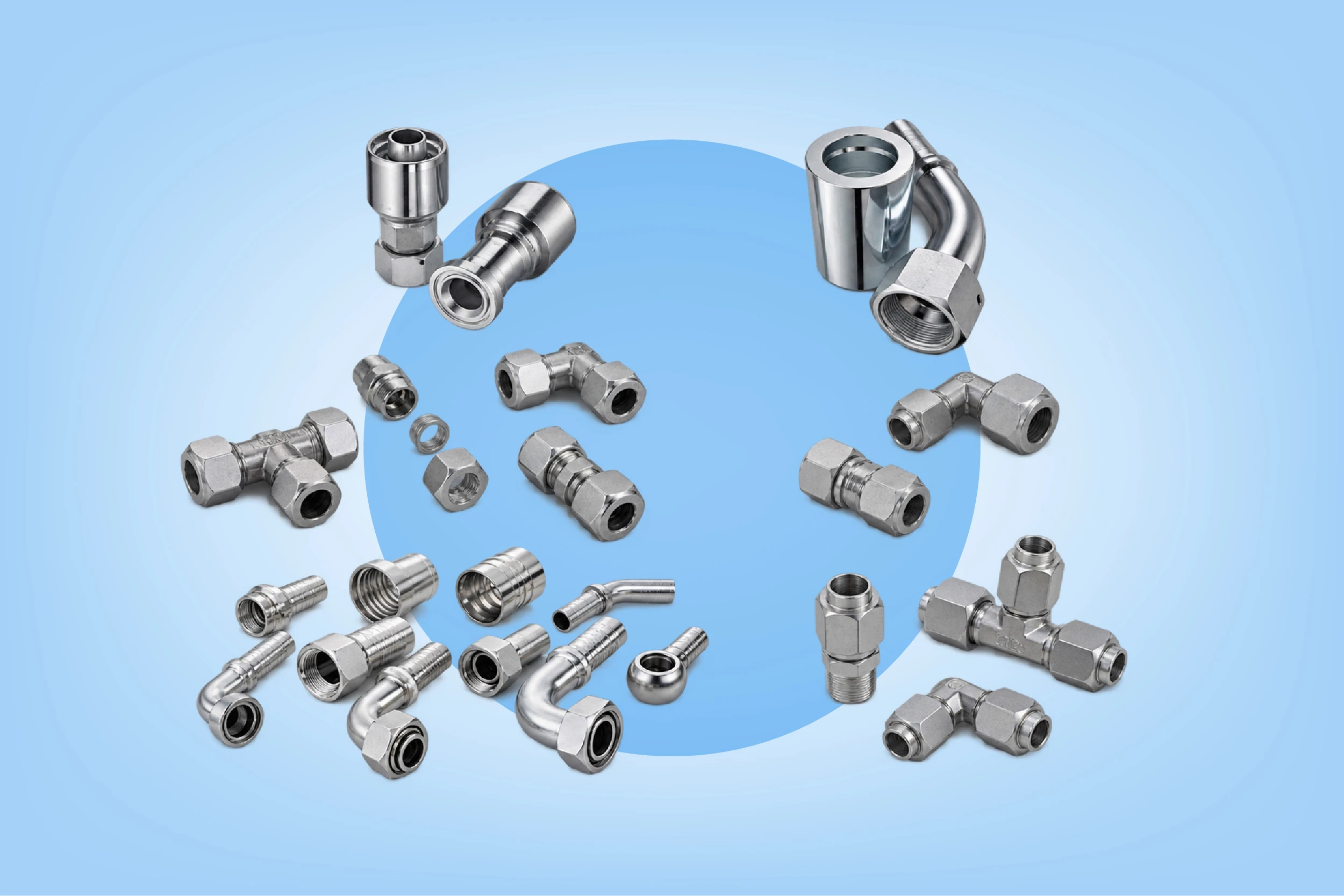
LubeTeam Hydraulic offers a range of Hydraulic Fittings, including solutions for rigid pipes and flexible hoses, one-piece fittings, and connections compliant with different technical standards.
DIN 2353 Fittings: Precision and Reliability
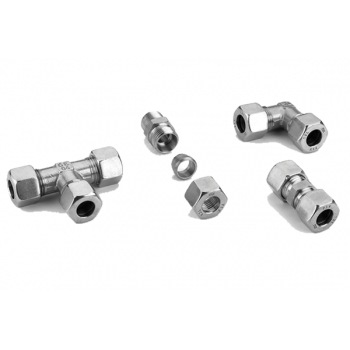
DIN 2353 fittings are a well-established solution for connecting rigid pipes in hydraulic systems.
In traditional configurations, a cutting ring engages with the outer surface of the tube during assembly, creating a strong mechanical connection and contributing to sealing performance.
The 24° cone geometry characterizes this family of connections, which is also covered by the ISO 8434-1 standard.
Light-duty and heavy-duty series allow components to be selected according to dimensions and permissible operating pressures.
Proper installation requires particular attention to tube preparation, cutting ring positioning, and the manufacturer’s tightening instructions.
SAE J514 Fittings: Connections for Industrial Applications
The SAE J514 standard covers several fitting configurations for fluid power systems, including 37° flared connections, commonly known as JIC fittings.
These fittings rely on contact between conical surfaces to create a seal and are widely used in industrial and mobile hydraulic circuits.
They offer versatility and allow relatively quick assembly and maintenance operations.
It is essential to verify thread compatibility, sealing seat geometry, and pressure rating. Two fittings with seemingly compatible threads may use different sealing systems and may not be interchangeable.
Hydraulic Hose Fittings and One-Piece Solutions
Hydraulic hose fittings connect flexible hoses to different sections of the circuit and must withstand both internal pressure and mechanical stresses caused by hose movement.
In crimped assemblies, the ferrule and insert create a stable connection through controlled deformation.
One-piece fittings integrate connection elements into a configuration designed to simplify component handling and management.
In both cases, compatibility between the hose, fitting, and crimping parameters is essential. Assembly must comply with the system manufacturer’s specifications.
How to Choose High-Pressure Hydraulic Fittings
Selecting a hydraulic fitting requires a comprehensive assessment of operating conditions. Dimensional compatibility alone does not guarantee a safe connection.
A fitting may have the correct thread yet still be unsuitable for the system’s pressure, temperature, or mechanical stresses.
Operating Pressure and Pressure Spikes
The pressure rating is one of the first parameters to check.
The fitting must withstand the maximum pressure expected within the circuit, including any transient overpressure conditions.
During startup, shutdown, or actuator movement reversal, the system may generate pressure spikes exceeding normal operating pressure.
These fluctuations repeatedly stress sealing surfaces and can accelerate component fatigue.
For this reason, designers must verify the limits specified by the manufacturer, testing conditions, and the possible need for overpressure protection devices.
Material Compatibility and Oil Temperature
The fitting material must withstand the chemical characteristics of the fluid and the environmental conditions.
Carbon steel and stainless steel are commonly used solutions, but they require different considerations regarding corrosion resistance, mechanical strength, and application requirements.
Seals must also retain their properties under the expected operating conditions.
High temperatures can accelerate elastomer aging, while excessively low temperatures can reduce their elasticity.
Oil viscosity, which refers to its resistance to flow, also changes with temperature. Hot oil generally flows more easily, while cold oil offers greater resistance to movement.
These variations influence the overall behavior of the circuit and may contribute to changes in the stresses acting on connections.
Vibrations and Mechanical Stress
Vibrations are particularly critical in mobile machinery and systems involving repetitive movements.
A pipe installed without adequate support can transfer oscillations directly to the fitting, generating alternating loads and increasing the risk of loosening or connection fatigue.
Proper pipe routing, suitable supports, and compliance with minimum hose bend radii help reduce these stresses.
Common Causes of Leaks in Hydraulic Fittings
Leaks are not necessarily caused by defective components. They often result from installation errors, technical incompatibilities, or operating conditions exceeding the specified limits.
Insufficient or Excessive Tightening
Insufficient tightening can prevent proper contact between sealing surfaces.
Conversely, excessive tightening force can deform sealing seats, damage seals, or compromise threads.
Operators must follow the manufacturer’s specific instructions and use the tightening method prescribed for the connection.
There is no universal tightening torque suitable for all hydraulic fittings.
Contamination and Surface Damage
Metal particles, dust, and machining residues can interfere with proper contact between surfaces.
Even a small contaminant can prevent a seal from adhering uniformly to its seat.
During assembly, technicians must ensure component cleanliness, protect open connections, and check for scratches or deformation.
A damaged surface requires technical assessment and, when necessary, component replacement.
Incompatible Fittings and Threads
Using components manufactured according to different standards can create connections that appear stable but do not provide reliable sealing.
Compatibility must include thread type, pitch, sealing seat geometry, and sealing principle.
Forcing incompatible components together can damage both parts and cause leaks during operation.
Proper Installation of Hydraulic Fittings: Best Practices
Accurate installation is one of the most effective ways to prevent sealing problems.
Before installation, technicians must identify the fitting, inspect the condition of its surfaces, and verify compatibility with the pipe or hose.
Rigid pipe preparation requires square cuts, proper deburring, and compliance with assembly procedures.
For flexible hoses, crimping specifications, hose length, and correct end-fitting orientation must be checked.
During tightening, operators must use appropriate tools and avoid twisting or lateral loads.
Once installation is complete, qualified personnel must perform leak-tightness checks according to the procedures established for the system, using the necessary protective measures.
Preventive Maintenance and Leak Detection
Preventive maintenance helps identify abnormalities before they lead to significant failures.
Periodic inspections should focus on connections most exposed to vibrations, temperature fluctuations, and frequent pressure cycles.
Oil traces, corrosion, deformation, and abnormal pipe movements may indicate conditions requiring further investigation.
How to Detect a Leak Safely
Before working on a fitting, maintenance personnel must shut down the system, isolate it from energy sources, and release residual pressure, including any pressure stored in accumulators.
A high-pressure oil jet can penetrate the skin and cause extremely serious injuries. Never attempt to locate a leak using your hands.
After making the circuit safe, technicians can clean the affected area, inspect the surfaces, and identify the source of the leak using appropriate tools and procedures.
If the fitting shows structural damage or compromised sealing surfaces, replacement is generally the safest solution.
Predictive Maintenance and Operating Condition Monitoring
In more complex systems, monitoring pressure, temperature, and vibrations can help identify abnormal conditions.
Analyzing changes over time makes it possible to recognize operating patterns that warrant targeted inspection.
Monitoring does not replace direct inspection of connections, but it helps schedule maintenance activities and reduce the risk of unexpected downtime.
Reliable Hydraulic Fittings for Production Continuity
The sealing performance of high-pressure hydraulic fittings directly affects the safety, efficiency, and service life of hydraulic circuits.
Selecting compatible components, following proper installation procedures, and carrying out regular maintenance help minimize the risk of leaks and reduce failure-related costs.
Choosing the right hydraulic fitting means protecting the entire circuit, ensuring more reliable connections, and supporting uninterrupted production operations.