


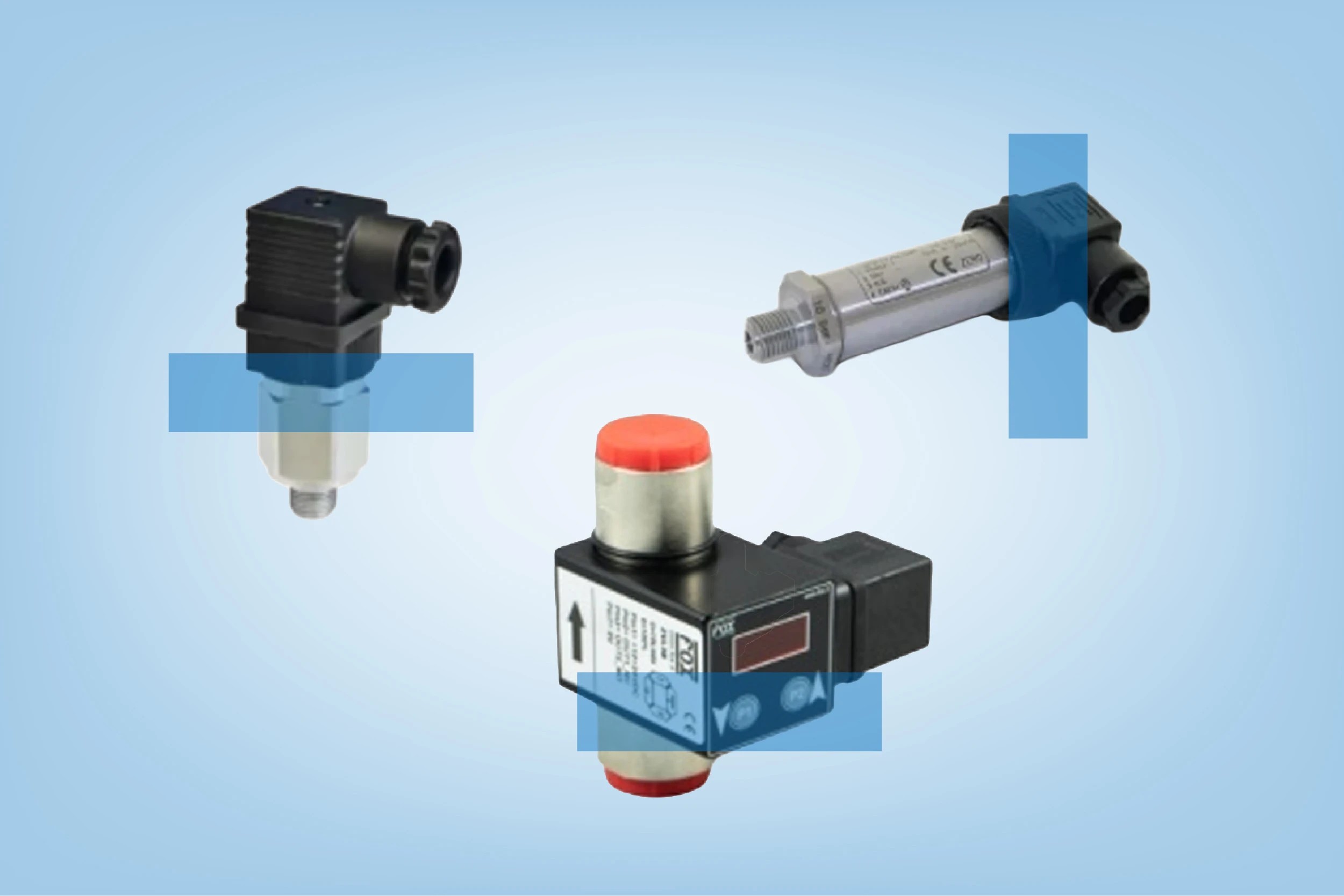
Hydraulic measurement and control instruments make it possible to monitor the operating conditions of hydraulic systems, identify potential anomalies, and maintain consistent performance over time. Pressure, flow rate, temperature, and oil level are essential parameters for assessing circuit efficiency and ensuring the proper operation of components.
Accurate measurements enable technicians to promptly detect abnormal variations, reduce the risk of failures, and plan targeted maintenance activities. Conversely, unsuitable instruments or unreliable readings can conceal problems that compromise productivity, safety, and equipment service life.
Selecting the right measuring devices therefore requires careful consideration of system characteristics, operating conditions, and monitoring objectives.
What Are Hydraulic Measurement and Control Instruments?
Hydraulic measurement instruments are devices that detect and, in some cases, transmit or process information about physical parameters within hydraulic circuits.
Their primary function is to make system behavior observable during operation. By analyzing this data, operators can verify whether components are functioning within the specified parameters and identify any deviations.
These devices can be divided into three main functional categories:
-
Indicating instruments: directly display a measured parameter, such as pressure gauges and level indicators.
-
Sensors and transducers: convert physical quantities into signals that can be used by monitoring systems.
-
Control devices: detect when specific conditions are reached and activate signals or commands, such as pressure switches and flow switches.
These solutions perform different but complementary functions. Integrating them makes it possible to create a more comprehensive and reliable monitoring and control system.
Key Parameters to Monitor in Hydraulic Systems
Every hydraulic circuit uses a fluid to transmit energy and operate mechanical components. Fluid behavior depends on several closely interconnected operating parameters.
Hydraulic Pressure: Controlling Force and Loads
Pressure is one of the most important parameters in hydraulic systems. The load applied to the actuators determines the pressure required to generate the necessary force.
Pressure exceeding design limits can place excessive stress on pipes, fittings, seals, and other components. Insufficient pressure, on the other hand, may prevent actuators from generating the required force.
Monitoring makes it possible to detect fluctuations, pressure spikes, and deviations from normal operating conditions.
For example, high pressure upstream of a filter, accompanied by significantly lower pressure downstream, may indicate a restriction in oil flow. Comparing the two measurements helps locate the problem.
Hydraulic Flow Rate: Speed and Continuity of Movement
Flow rate indicates the volume of fluid passing through a section of the circuit per unit of time.
In systems equipped with hydraulic cylinders, flow rate directly affects actuator extension and retraction speeds. In hydraulic motors, it helps determine rotational speed.
Insufficient flow can cause slow movements, longer production cycles, and lower-than-expected performance.
Variations may result from several factors, including pump wear, internal leakage, incorrect adjustments, or restrictions within the circuit.
Measuring flow rate helps distinguish a supply problem from an anomaly affecting other components.
Oil Temperature: Stability and Component Protection
Temperature directly affects the viscosity of hydraulic oil, which is its resistance to flow.
As temperature increases, oil generally becomes less viscous. If viscosity falls below recommended levels, the lubricating film may become thinner, increasing wear and internal leakage.
When temperature decreases, oil becomes more viscous and encounters greater resistance as it flows through pipes and components.
Effective temperature monitoring helps identify conditions that contribute to overheating, such as excessive energy losses, inadequate cooling, or prolonged operation of pressure relief valves.
Oil Level: Continuous Supply and Safety
The fluid level in the reservoir contributes to the proper operation of the hydraulic system.
An excessively low level may cause the pump to draw in air, resulting in noise, irregular operation, and potential damage.
An excessively high level, on the other hand, may reduce the space available to accommodate changes in fluid volume and lead to overflow or other operating problems, depending on the reservoir configuration.
Level indicators allow operators to quickly check the available oil quantity and identify unusual variations.
Types of Hydraulic Measurement Instruments
The choice of instrument depends on the parameter to be measured, the required accuracy, and the intended application.
Hydraulic Pressure Gauges for Pressure Measurement
Pressure gauges provide a direct reading of the pressure at a specific point in the circuit.
Analog models generally use an elastic element, such as a Bourdon tube, which deforms under pressure and moves the pointer across the dial.
Digital pressure gauges, on the other hand, use an electronic sensor and display the measured value on a screen.
Selection criteria should include measurement range, accuracy class, fluid compatibility, and environmental conditions.
In systems subject to pressure pulsations or vibrations, specific design features can improve readability and reduce mechanical stress on the instrument.
Pressure Switches and Pressure Transducers
Pressure switches monitor pressure and switch an electrical contact or output when the measured value reaches a preset threshold.
They are used in alarm systems, automated sequences, and control functions specified in the system design.
Pressure transducers, on the other hand, provide a signal proportional to the measured pressure. This allows electronic systems to continuously acquire pressure values and analyze their trends.
The distinction is important: a pressure switch signals when a specific condition is reached, whereas a transducer makes it possible to monitor how pressure changes over time.
Flow Meters and Flow Switches for Flow Monitoring
Flow meters measure fluid flow rate and help verify whether the circuit receives the required quantity of oil.
Flow switches, also known as flow detectors, detect when a specific flow condition is reached and provide a switching signal.
A flow meter is useful when assessing pump performance or monitoring the actual flow rate within a circuit.
A flow switch is used when it is necessary to verify the presence of a minimum flow rate, for example in an auxiliary circuit.
Temperature Sensors and Level Indicators
Temperature sensors measure the thermal conditions of the fluid and allow this information to be integrated into control systems.
Common technologies include resistance temperature detectors (RTDs) and electronic sensors, which provide measurement capabilities suitable for different industrial requirements.
Level indicators may use sight glasses, float-based mechanisms, or electronic sensors.
Some devices combine multiple functions, allowing both oil level and temperature to be monitored through a single installation point.
How to Choose Hydraulic Measurement and Control Instruments
Proper selection should be based on the system’s actual operating conditions, rather than solely on the nominal specifications listed in a catalog.
Measurement Range and Accuracy
The measurement range must cover the expected operating values, including any potential peaks.
A pressure gauge with an excessively wide scale may make small variations difficult to interpret. Conversely, an instrument with an upper limit too close to the maximum operating pressure may be exposed to overload.
It is also important to evaluate the accuracy specified by the manufacturer, distinguishing accuracy from instrument resolution.
Resolution indicates the smallest change that can be displayed, while accuracy describes how closely the measured value corresponds to the actual value.
Compatibility with Fluids and Operating Conditions
Every instrument must withstand the chemical and physical characteristics of the fluid being used.
Compatibility involves metallic materials, seals, and surfaces that come into contact with the oil.
Temperature, vibrations, humidity, and environmental contamination can affect device durability and reliability.
In industrial systems, enclosure protection ratings and resistance to mechanical stress are also important selection criteria.
Electrical Signals and Integration into Control Systems
Electronic sensors may use different output types, including analog current or voltage signals and digital interfaces.
The choice depends on the characteristics of the data acquisition system and the distance between the sensor and the control unit.
Electrical compatibility, power supply requirements, response times, and protection against interference must all be verified.
Even a technically accurate device can provide unreliable data if its electrical connections introduce interference or acquisition errors.
Installation and Maintenance of Measurement Instruments
Even a high-quality instrument can produce incorrect readings if it is not installed according to the manufacturer’s instructions.
Correct Sensor Positioning
The installation point directly affects how representative the measurement is of actual operating conditions.
For example, when evaluating pump performance, measurement points must be selected according to the operating conditions being analyzed.
To assess a pressure drop, pressure measurements must be compared upstream and downstream of the component concerned.
Temperature sensors must measure values representative of the fluid, avoiding locations excessively affected by external heat sources.
Calibration and Periodic Inspections
Calibration makes it possible to compare instrument readings against reliable reference values and determine any measurement errors.
Over time, vibrations, overloads, and environmental conditions can alter instrument performance.
An inspection schedule should take into account frequency of use, measurement criticality, manufacturer recommendations, and the results of previous inspections.
When an instrument exceeds permitted tolerances, technical personnel must evaluate whether adjustment, repair, or replacement is necessary.
Inspections must follow appropriate safety procedures. Before disconnecting a device, the circuit must be isolated, residual pressure released, and any hydraulically supported loads safely secured.
Diagnostics and Predictive Maintenance of Hydraulic Systems
Measurement instruments are not only used to verify the immediate operation of a circuit. They also make it possible to analyze how system performance changes over time.
How to Identify Anomalies Through Data
A single measurement rarely makes it possible to identify a fault with certainty. Comparing multiple parameters provides much more reliable information.
A reduction in flow rate accompanied by an increase in temperature may indicate internal leakage or inefficiencies within the circuit.
Pressure fluctuations associated with abnormal noise, on the other hand, may require inspections of the pump suction line, the presence of air in the system, and valve operation.
Technicians must interpret each variation while considering load, rotational speed, temperature, and operating conditions.
Continuous Monitoring and Predictive Maintenance
Integrating transducers with data acquisition systems makes it possible to record operating parameters throughout production cycles.
Analyzing historical trends helps identify gradual changes that occasional measurements might fail to reveal.
For example, a steady increase in temperature under the same load conditions may indicate deteriorating cooling performance or increasing energy losses.
Predictive maintenance uses this information to guide inspections and corrective actions before anomalies cause unplanned machine downtime.
LubeTeam Hydraulic Measurement and Control Instruments
Choosing reliable components is essential for keeping hydraulic system performance under control.
LubeTeam Hydraulic offers a range of devices designed to monitor key operating parameters, with solutions suited to different industrial requirements.
In the Measurement and Control Instruments section, you can explore the available product categories, including flow switches, level indicators and sensors, pressure switches, and transducers.
Selection should take into account circuit characteristics, the parameters to be monitored, and actual operating conditions.
Technical support during component selection helps identify devices that meet application requirements, avoiding oversized or unsuitable solutions.
Measurement Accuracy and System Efficiency: A Strategic Investment
Monitoring hydraulic system performance requires reliable information, suitable instruments, and correct data interpretation.
Pressure gauges, pressure switches, transducers, flow switches, and sensors make it possible to monitor circuit behavior and identify conditions that may compromise reliability.
An effective measurement strategy helps reduce unplanned maintenance, improve maintenance management, and extend component service life.
Accuracy depends not only on the quality of individual devices but also on the entire process of selection, installation, calibration, and analysis.
Choosing the right hydraulic measurement and control instruments means transforming operational data into better-informed technical decisions, improving reliability, safety, and production continuity.